Optimizing Your Veterinary Boarding Workflow in GP Clinics
Managing pet boarding alongside medical appointments can overwhelm general practice teams. Learn how to standardize your veterinary boarding workflow, streamline intake, and improve client communication to reduce staff stress and boost clinic efficiency.
By Helpful.vet Team
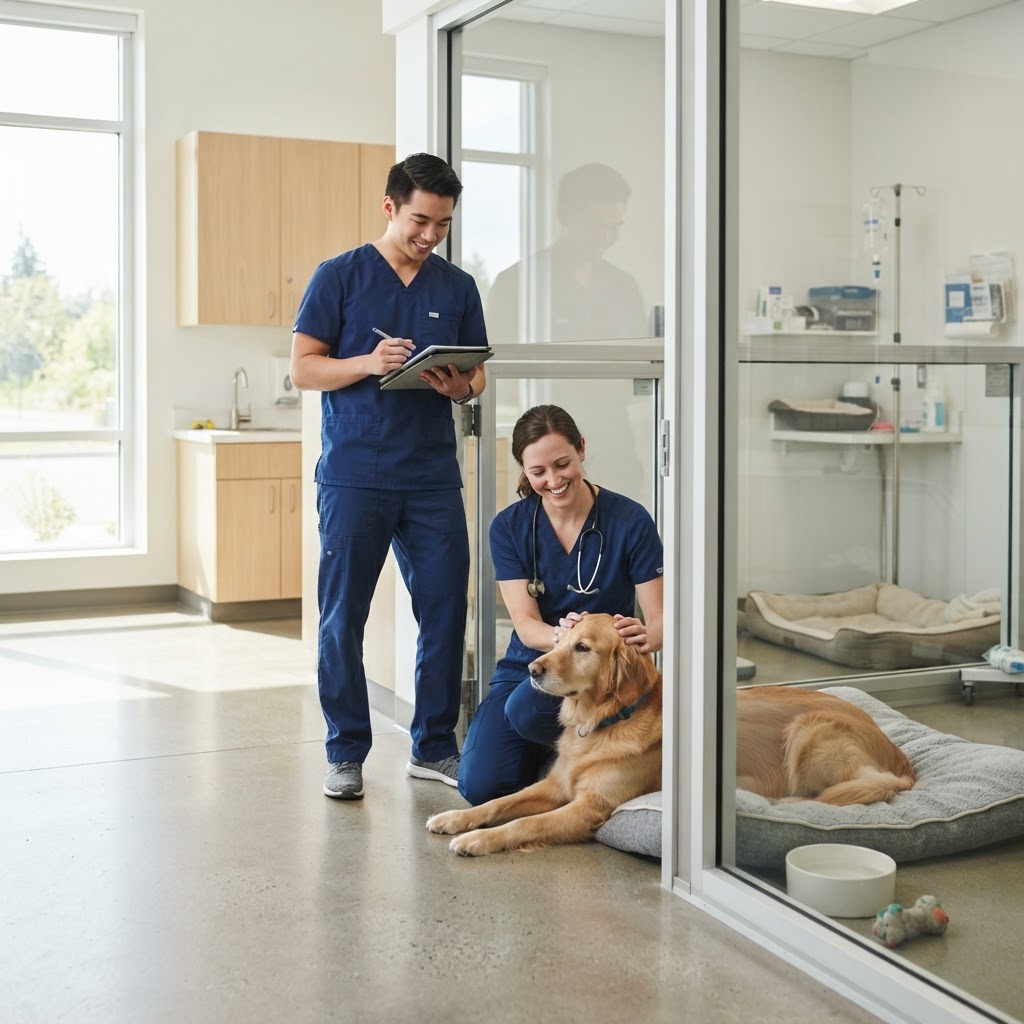
Managing pet boarding alongside daily medical appointments can quickly overwhelm general practice teams. Without a standardized veterinary boarding workflow, clinics often face chaotic morning drop-offs, mismanaged feeding schedules, and frustrated staff. When kennel operations bleed into clinical time, the entire practice suffers from bottlenecks and delayed patient care.
For general practice (GP) clinics that offer boarding or daycare services, separating medical operations from lodging logistics is critical. By implementing structured intake protocols, clear task delegation, and standardized documentation, your team can turn boarding from a daily headache into a streamlined, profitable service. This guide breaks down how to optimize your veterinary boarding workflow from pre-arrival to discharge.
The Cost of a Disorganized Boarding Workflow
When boarding processes are ad-hoc, the hidden costs to your clinic multiply rapidly. Front desk staff spend excessive time verifying vaccine records during morning rushes, technicians are pulled away from treatments to administer boarding medications, and doctors are interrupted to authorize routine parasite preventatives for lodging pets.
A disorganized veterinary boarding workflow typically manifests in three ways:
- Front Desk Bottlenecks: Boarding drop-offs taking 15-20 minutes instead of 5 minutes, causing medical appointments to back up.
- Inventory Shrinkage: Clinic food or medications being used for boarders without proper invoicing because owners forgot to bring their own supplies.
- Standard of Care Drift: Missed parasite screenings or expired vaccines being overlooked until the pet is already in the kennel.
To assess how boarding is impacting your overall efficiency, consider using the GP Clinic Workflow Score tool to identify specific operational bottlenecks.
Step 1: Standardizing the Boarding Intake Process
The foundation of an efficient veterinary boarding workflow is a frictionless intake process. The goal is to gather all necessary information, verify medical requirements, and secure authorizations before the client ever walks through the door.
Pre-Arrival Communication and Verification
Do not wait until drop-off to verify vaccines. Implement a strict pre-arrival protocol managed by your client service representatives (CSRs):
- 72-Hour Audit: Three days before the reservation, audit the patient's file for required vaccines (e.g., Rabies, DHPP, Bordetella), negative fecal tests, and current flea/tick prevention.
- Digital Boarding Agreements: Send boarding agreements and feeding/medication questionnaires via your clinic's digital forms platform 48 hours in advance. Require completion prior to drop-off.
- Automated Reminders: Send a checklist to the owner reminding them to bring medications in original prescription bottles and pre-portioned food.
The 5-Minute Drop-Off Protocol
When the client arrives, the CSR should only need to confirm the pre-submitted information, not gather it from scratch. A streamlined drop-off looks like this:
- Confirm Belongings: Inventory the pet's food, medications, and approved personal items. Label everything immediately with the pet's name and client ID.
- Review Medical Needs: Briefly confirm the medication schedule and dosage. If the pet requires complex medical management (e.g., diabetic insulin injections), a veterinary technician should handle this portion of the intake.
- Sign Authorizations: Ensure the emergency contact information is accurate and the medical treatment authorization (in case of illness during the stay) is signed.
- Transfer to Kennel: A kennel assistant escorts the pet to their assigned run, allowing the CSR to return to medical check-ins.
Step 2: Managing Daily Boarding Operations
Once the pet is checked in, the veterinary boarding workflow shifts to the kennel staff and technicians. Clear communication and visual management are essential to prevent errors and ensure high-quality care.
Where is your workflow slowing down?
Take the free 3-minute GP Clinic Workflow Score and see where your daily workflow is strong, where friction builds up, and what to improve first.
Get Your Workflow ScoreVisual Management and Cage Cards
Every boarding pet must have a standardized cage card that provides critical information at a glance. Use a color-coded system to alert staff to special needs:
- Red: Medical alert (e.g., diabetic, seizure history, requires technician for medication).
- Yellow: Behavioral alert (e.g., fear-free handling required, flight risk, food aggressive).
- Green: Standard boarding, no special requirements.
The cage card should clearly list the pet's feeding schedule, exact diet, and exercise routine. Do not rely on verbal handoffs between shift changes.
Medication and Feeding Tracking
Medication errors in boarding are a significant liability. Establish a rigid protocol for administering and documenting treatments:
- Designated Medication Times: Batch boarding medications into specific time blocks (e.g., 8:00 AM and 8:00 PM) to align with technician workflows, rather than administering them haphazardly throughout the day.
- Technician Oversight: While kennel assistants can handle routine feeding and walking, all prescription medications must be administered and logged by a credentialed veterinary technician or trained veterinary assistant, depending on your state's practice act.
- Daily Logs: Use digital treatment sheets in your Practice Management Software (PIMS) or laminated physical logs attached to the run to record every meal, elimination, and medication dose. Initial and time-stamp every entry.
Step 3: Streamlining the Discharge Process
The discharge process is your final opportunity to leave a positive impression on the client. A chaotic checkout erases the goodwill built by excellent pet care.
Pre-Checkout Preparation
To prevent front desk logjams, prepare for discharges the night before or early in the morning:
- Invoice Auditing: Review the boarding invoice to ensure all days, extra services (e.g., nail trims, exit baths), and clinic-provided diets are accurately billed.
- Belongings Staging: Gather and bag the pet's remaining food, medications, and leashes. Place them in a designated "Going Home" staging area near the front desk.
- Report Cards: Prepare a brief, positive report card detailing the pet's stay, eating habits, and behavior. This proactive communication reduces client anxiety and builds trust.
The Handoff
When the client arrives for pickup, the CSR processes the payment while a kennel assistant retrieves the pet. The CSR hands over the report card and belongings, ensuring a smooth, professional exit that takes less than five minutes.
Integrating Boarding with Medical Workflows
The most successful GP clinics treat boarding as an extension of their preventive care program. A well-integrated veterinary boarding workflow can actually drive medical compliance and revenue.
During the pre-arrival audit, identify any overdue preventive care. Offer to perform these services (e.g., annual exams, vaccines, heartworm tests, dental cleanings) while the pet is boarding. This provides convenience for the client and maximizes clinic efficiency. Ensure these "medical boarding" patients are properly scheduled in the appointment book so the clinical team has dedicated time to perform the procedures, rather than squeezing them in between regular appointments.
By standardizing your veterinary boarding workflow, you protect your medical team's time, improve patient safety, and create a more profitable, less stressful environment for your entire practice. For more insights on balancing clinic operations, explore the GP Practice Benchmark Tool to see how your service mix compares to industry standards.

Helpful.vet Team
ContributorA veterinary professional contributing practical insights to Helpful.vet.
More about Helpful.vetFrequently asked questions
Speed up intake by moving all paperwork and verifications to a pre-arrival digital workflow. Require clients to submit vaccine records, feeding instructions, and signed agreements 48 hours before drop-off. This reduces the physical drop-off time to a quick 5-minute confirmation and belongings handoff.
A comprehensive boarding agreement should include emergency contact information, authorization for medical treatment if the pet becomes ill, and clear policies on abandoned pets. It must also outline your clinic's requirements for vaccinations, parasite prevention, and fees for clinic-provided food or medications.
Pets requiring medical attention should be flagged with a color-coded cage card and integrated into the clinical treatment board. Ensure that a credentialed technician or veterinarian evaluates the pet, and always contact the owner or their designated emergency contact before initiating non-emergency diagnostics or treatments.
To minimize liability and ensure patient safety, prescription medications should be administered and logged by a credentialed veterinary technician or a highly trained veterinary assistant. Kennel assistants should focus on feeding, walking, and facility sanitation, alerting the medical team to any abnormalities.
Medical disclaimer: Helpful.vet provides educational and workflow-related information for veterinary professionals. It does not provide medical advice, diagnosis, or treatment recommendations. Clinical decisions should always be made by a licensed veterinarian using patient-specific history, examination findings, diagnostics, and professional judgment. See our full medical disclaimer.
Get more practical GP tools in your inbox
Short, useful resources for veterinary practice teams.