Optimizing Your Veterinary Referral Workflow in GP Clinics
The administrative process between a referral recommendation and the specialist appointment is one of the most friction-prone workflows in general practice. Learn how to build a standardized referral SOP, designate a referral coordinator, and close the loop on patient care.
By Helpful.vet Team
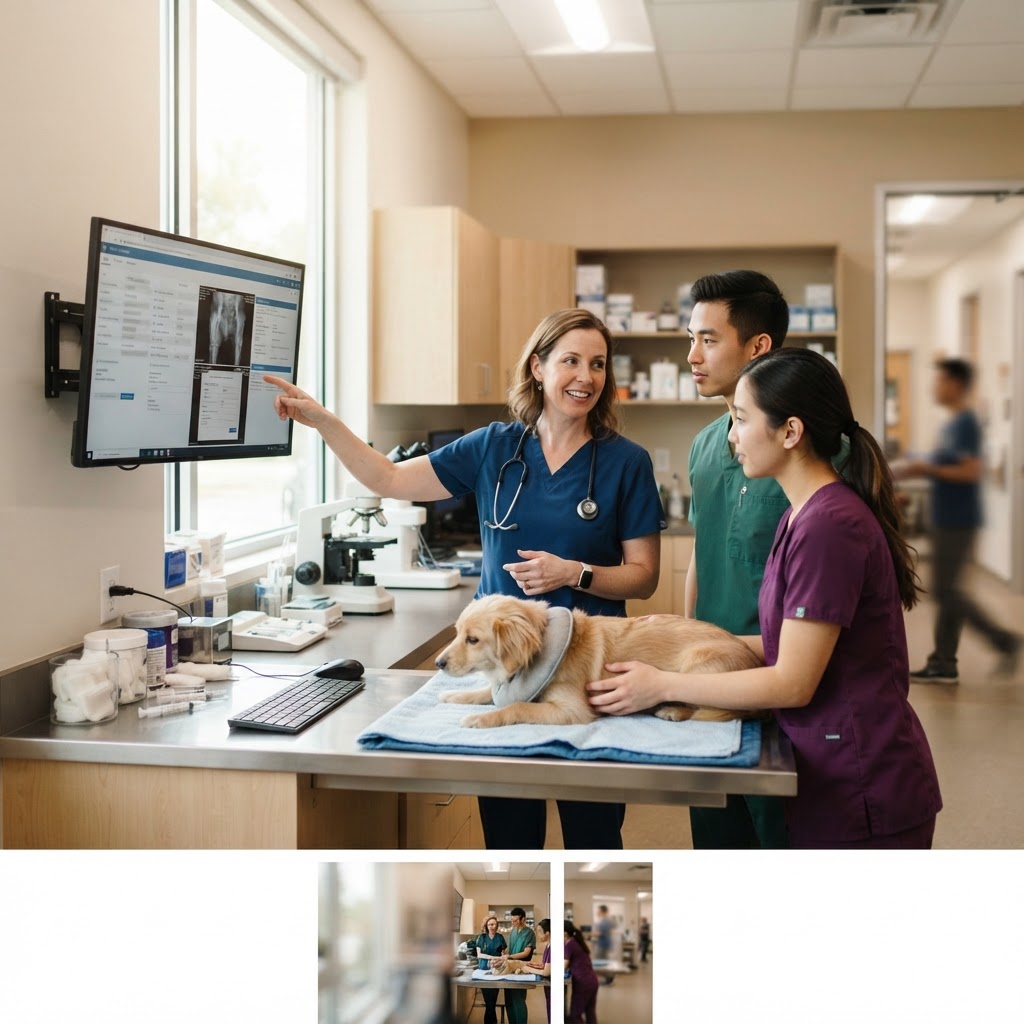
In general practice, recommending that a patient see a board-certified specialist is a routine clinical decision. However, the administrative process that follows—transferring records, communicating with the specialty hospital, and ensuring the client actually makes the appointment—is often one of the most friction-prone workflows in veterinary medicine. A broken veterinary referral workflow leads to frustrated clients, missing specialist reports, and hours of wasted staff time tracking down information.
As case complexity increases and general practices collaborate more frequently with oncology, surgery, and internal medicine specialists, relying on sticky notes and verbal handoffs is no longer sustainable. According to the 2025 AAHA Referral Guidelines, centering the pet family's experience and emphasizing collaborative communication are critical for smooth transitions of care. This article provides a comprehensive guide to optimizing your veterinary referral workflow, reducing administrative bottlenecks, and ensuring no patient falls through the cracks.
The Hidden Costs of a Fragmented Referral Process
When a veterinary referral workflow lacks standardization, the burden falls heavily on your front desk and technical staff. Without a clear standard operating procedure (SOP), clinics typically experience several costly operational failures.
- Duplication of effort: Customer Service Representatives (CSRs) spend hours on hold with specialty centers trying to confirm if records were received, while specialists call back requesting missing lab results or radiographs.
- Client attrition: When clients feel abandoned between the GP clinic and the specialist, their trust in your practice diminishes. If they arrive at the specialty center and their records are missing, the resulting frustration is often directed at the primary care veterinarian.
- Lost revenue and missed follow-ups: When specialist reports disappear into a digital black hole, GPs miss the opportunity to provide ongoing management, follow-up bloodwork, or long-term medication refills.
To audit how much time your team is currently losing to inefficient processes, consider running your practice through the GP Clinic Workflow Score tool. Identifying these bottlenecks is the first step toward building a more resilient system.
Designating a Referral Coordinator
One of the most effective ways to streamline the veterinary referral workflow is to centralize the responsibility. While the veterinarian makes the clinical recommendation, the administrative execution should be delegated to a specific role: the Referral Coordinator. In most GP clinics, this role is filled by a lead CSR or a dedicated veterinary assistant.
The Referral Coordinator acts as the primary liaison between your clinic, the client, and the specialty hospital. Their core responsibilities should include:
- Monitoring the PIMS (Practice Information Management System) for new referral requests generated by the medical team.
- Packaging and transmitting medical records, DICOM images, and laboratory results to the specialty center.
- Providing the client with a standardized referral information packet.
- Tracking the status of the referral to ensure the client booked the appointment.
- Receiving inbound specialist reports, attaching them to the patient's file, and alerting the primary veterinarian for review.
By funneling all referral logistics through one or two trained individuals, you eliminate the "I thought you sent it" miscommunications that plague busy treatment rooms.
Building a Standardized Referral SOP
A robust referral management SOP establishes the complete process from the moment the veterinarian recommends advanced care to the moment the specialist's discharge summary is reviewed. Implement the following step-by-step workflow in your clinic.
Step 1: Initiating the Referral
The workflow begins in the exam room. When a veterinarian determines a referral is necessary, they must document the specific specialty, the preferred facility (if applicable), and the urgency of the case (e.g., STAT emergency vs. routine consult). The veterinarian should enter a specific "Referral Request" code or task into the PIMS, which automatically alerts the Referral Coordinator. This eliminates the need for verbal handoffs in a noisy hallway.
Step 2: Packaging the Medical Records
Specialty hospitals are overwhelmed by inconsistent record formats. Sending a 50-page PDF of a pet's entire lifetime history is just as unhelpful as sending too little information. The Referral Coordinator should prepare a standardized package that includes:
Where is your workflow slowing down?
Take the free 3-minute GP Clinic Workflow Score and see where your daily workflow is strong, where friction builds up, and what to improve first.
Get Your Workflow Score- A concise referral form or letter stating the primary complaint and the specific question for the specialist.
- The last 12 to 18 months of relevant medical notes.
- All pertinent laboratory results from the last 6 months.
- Diagnostic images in DICOM format (avoid sending JPEGs, which lack diagnostic quality).
- A complete list of current medications and dosages.
Aim for a strict 24-hour turnaround time for sending routine referral packages. For urgent cases, records must be sent immediately while the client is en route to the emergency or specialty center.
Step 3: Client Handoff and Education
Clients are often overwhelmed when told their pet needs a specialist. Clear communication at this stage is vital. Provide the client with a physical or digital "Referral Next Steps" document. This should include the name, address, and phone number of the specialty hospital, instructions on whether the client or the GP clinic is responsible for booking the appointment, and a brief explanation of what to expect regarding specialty consultation fees. You can measure the effectiveness of your client education using the Client Communication Score tool.
Closing the Loop: Tracking Specialist Reports
Sending the referral is only half the workflow. The process frequently breaks down when the patient returns to the GP clinic, but the specialist's report is nowhere to be found. To prevent this, clinics must implement a "Referral Tracing System."
Create a digital whiteboard or a specific tracking tag within your PIMS for "Pending Referrals." When the Referral Coordinator sends a record, the patient is added to this list. The coordinator should review this list weekly. If two weeks have passed and no report has been received, the coordinator proactively contacts the specialty hospital to check the status. Did the client decline to book? Was the appointment pushed out by a month? Is the report sitting in an unmonitored fax inbox?
Once a report is received, it must be immediately attached to the patient's digital record. The coordinator then assigns a high-priority task to the referring veterinarian to review the specialist's findings. The veterinarian reviews the report, updates the GP treatment plan, and dictates a brief follow-up call to the client to discuss the next steps. This closed-loop system ensures continuity of care and reinforces the GP's role as the primary manager of the pet's overall health.
Leveraging Technology for Workflow Automation
Modern veterinary software can significantly reduce the manual labor involved in the referral process. Disconnected systems are one of the biggest causes of inefficiency in clinics today. Look for workflow automation tools that integrate directly with your PIMS.
For example, automated task management software can route referral requests directly to the front desk team without relying on manual reminders. Furthermore, utilizing cloud-based image sharing platforms rather than burning CDs saves significant technician time and ensures specialists receive high-quality radiographs instantly. Transitioning away from traditional fax machines to secure, digital document management systems also prevents records from being lost in transmission.
Managing Urgent Versus Routine Referrals
Not all referrals are created equal, and your workflow must account for different levels of urgency. A routine dermatology referral can follow the standard 24-hour processing time. However, a patient in respiratory distress being transferred to an oxygen cage at a 24-hour facility requires an immediate, streamlined protocol.
For STAT referrals, the workflow must bypass the standard queue. The veterinarian or a dedicated technician should call the receiving facility directly to provide a doctor-to-doctor verbal handoff. Meanwhile, the front desk immediately emails or digitally transfers the most critical recent records and imaging. Having a clear, written distinction between "Routine" and "STAT" referral protocols prevents critical delays in patient care and reduces the stress on your team during emergency situations.
Continuous Improvement and Team Training
Implementing a new veterinary referral workflow requires team buy-in and consistent training. Hold a dedicated staff meeting to roll out the new SOP. Clearly define the role of the Referral Coordinator and ensure all veterinarians understand how to properly initiate a request in the PIMS. Periodically audit your referral process by tracking two key metrics: the average time it takes to send records after a doctor's request, and the percentage of specialist reports successfully attached to patient files within 48 hours of the specialty appointment.
By treating the referral process as a critical operational workflow rather than an administrative afterthought, general practice clinics can improve patient outcomes, reduce staff burnout, and build stronger, more collaborative relationships with specialty centers.

Helpful.vet Team
ContributorA veterinary professional contributing practical insights to Helpful.vet.
More about Helpful.vetFrequently asked questions
While veterinarians initiate the referral, the administrative execution should be delegated to a designated referral coordinator, such as a lead CSR or veterinary technician. This ensures consistent follow-up and prevents tasks from falling through the cracks.
Implement a standardized PIMS task or digital inbox specifically for specialist reports. The referral coordinator should attach the report to the patient's file and immediately assign a high-priority task to the referring veterinarian for review.
A complete package typically includes a concise referral letter or form, the last 12 to 18 months of medical records, all relevant laboratory results, and diagnostic images in DICOM format. Avoid sending the entire lifetime medical history unless specifically requested by the specialist.
Provide clients with a clear, written summary of what to expect, including the specialist's contact information, estimated wait times, and who is responsible for booking the appointment. Proactive communication prevents clients from feeling abandoned between clinics.
Medical disclaimer: Helpful.vet provides educational and workflow-related information for veterinary professionals. It does not provide medical advice, diagnosis, or treatment recommendations. Clinical decisions should always be made by a licensed veterinarian using patient-specific history, examination findings, diagnostics, and professional judgment. See our full medical disclaimer.
Get more practical GP tools in your inbox
Short, useful resources for veterinary practice teams.