Veterinary Client Compliance: Proven Strategies for GP Clinics
Discover actionable strategies to improve veterinary client compliance in your GP clinic. Learn how to overcome financial barriers, build trust, and streamline follow-ups.
By Helpful.vet Team
Improving veterinary client compliance is one of the most effective ways to enhance patient outcomes and drive practice growth. Despite the best efforts of general practice (GP) veterinary teams, a significant gap often exists between the care recommended in the exam room and the care actually provided at home. Bridging this gap requires a systematic approach to communication, education, and follow-up.
In this guide, we will explore practical, workflow-driven strategies to boost veterinary client compliance, reduce misunderstandings, and ensure that your medical recommendations translate into actionable steps for pet owners. For a baseline assessment of your current communication effectiveness, consider using our Client Communication Score tool.
Understanding the Barriers to Veterinary Client Compliance
Before implementing new protocols, it is crucial to understand why clients fail to follow through with veterinary recommendations. According to industry insights on Best Practices for Increasing Pet Owner Compliance, non-compliance typically stems from a combination of the following factors:
- Financial Constraints: Rising costs of veterinary care often force pet owners to prioritize certain treatments over others, sometimes skipping routine or preventive care entirely.
- Lack of Trust: Misinformation found online or negative past experiences can lead clients to question the necessity of the veterinary team's recommendations.
- Inadequate Education: If a client does not clearly understand how a specific screening test, vaccine, or medication benefits their pet, they are unlikely to comply. This is especially true for preventive care when the pet appears healthy.
- Information Overload: Stressful clinic visits can impair a client's ability to retain verbal information, leading to confusion once they return home.
Communication Strategies for the Exam Room
Effective communication is the cornerstone of veterinary client compliance. The way recommendations are presented significantly impacts the client's willingness to accept them.
Shifting the Mindset
Compliance should not be viewed merely as getting clients to follow orders. Instead, it is about providing patients with the care that the veterinary team believes is best for them. This subtle shift in perspective fosters more authentic, relationship-centered communication, which helps establish trust and expertise.
Clear and Tailored Messaging
- Use Plain Language: Avoid medical jargon. Explain diagnoses and treatments in terms that a layperson can easily grasp.
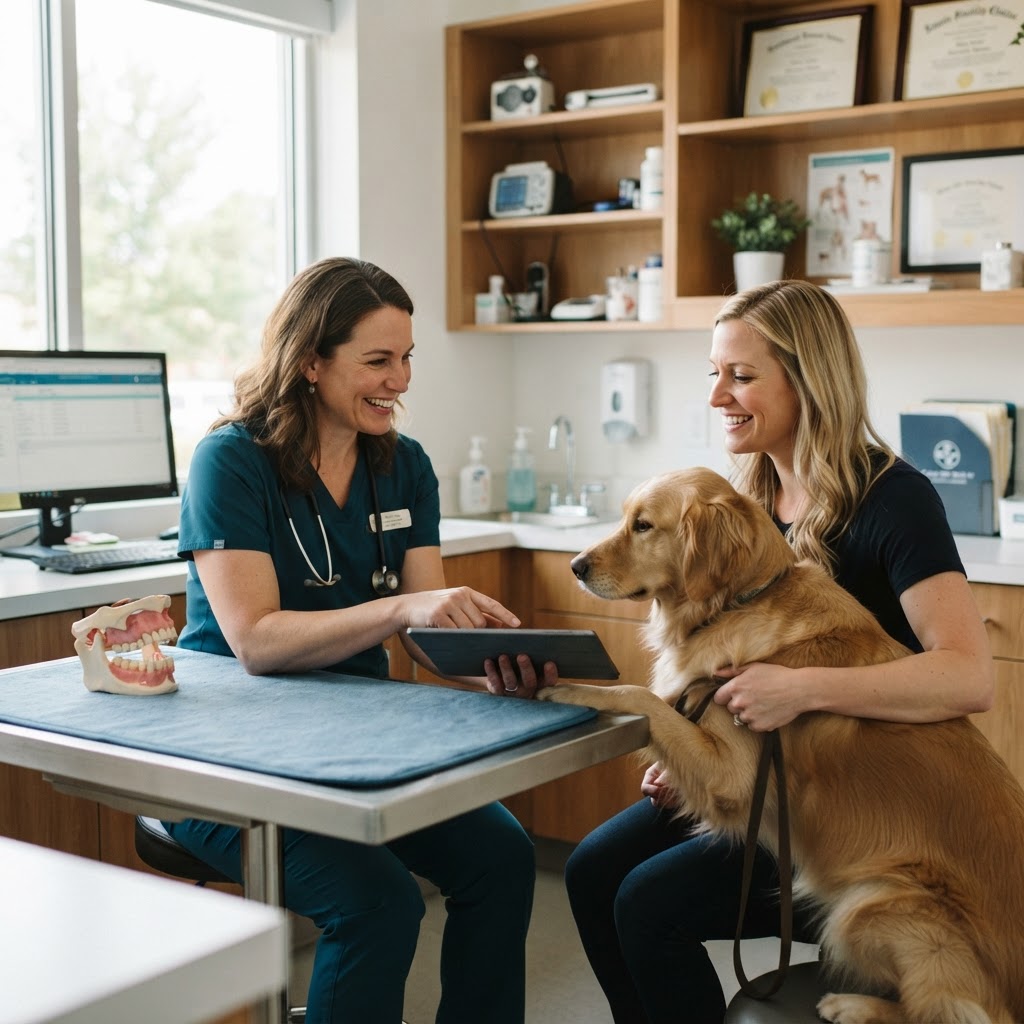
- Focus on the "Why": Always connect the recommendation to a tangible benefit for the pet. For example, instead of simply recommending a dental cleaning, explain how it prevents pain and systemic infection.
- Confirm Understanding: Utilize the "teach-back" method. Ask the client to repeat the medication schedule or warning signs back to you to ensure they have fully understood the instructions.
Optimizing Discharge Instructions for Better Follow-Through
Because clients retain very little verbal information after a stressful visit, written discharge instructions are critical. As highlighted in the Free Veterinary Discharge Instructions Template - VetVisit AI, these documents must be designed specifically for the owner, not the medical record.
Where is your workflow slowing down?
Take the free 3-minute GP Clinic Workflow Score and see where your daily workflow is strong, where friction builds up, and what to improve first.
Get Your Workflow ScoreEssential Elements of Discharge Instructions
To maximize compliance, every discharge document should include:
- What Was Done: A plain-language summary of the procedure or diagnosis, including what "normal" recovery looks like.
- Medications at Home: Clear instructions detailing the drug name, dose, route, frequency, and duration. Specify whether medications should be given with food.
- Activity and Feeding Restrictions: Concrete guidelines on what the pet can and cannot do (e.g., "leash-only bathroom breaks," "bland diet for 3 days").
- Warning Signs: Specific, actionable red flags that warrant an immediate call to the clinic (e.g., "vomiting more than twice," "refusal to eat for 24 hours").
- Recheck Information: Explicit details on whether a follow-up appointment is needed, along with clinic contact information for both regular hours and emergencies.
Providing these instructions in both printed and digital formats ensures the client has easy access to the information when they need it most.
The Role of Follow-Up Protocols
Compliance does not end when the client leaves the clinic. Proactive follow-up is essential for ensuring that treatment plans are executed correctly. Research discussed in Client Compliance--The Key to Successful Veterinary Practice - WSAVA2005 - VIN emphasizes that the practice team must take deliberate steps to ensure patients receive recommended care.
Implementing a Robust Follow-Up System
- Schedule the Next Visit Before They Leave: Always attempt to book the recheck or next preventive care appointment during the current checkout process.
- Automated Reminders: Utilize your practice management software to send automated text or email reminders for upcoming services, medication refills, and vaccinations.
- Callback Protocols: Assign dedicated time for veterinary technicians or receptionists to make follow-up calls 24 to 48 hours after a sick visit or procedure. This provides an opportunity to answer questions, check on the pet's progress, and reinforce the importance of the treatment plan.
Measuring and Benchmarking Compliance in Your GP Clinic
You cannot improve what you do not measure. Many practices overestimate their compliance rates because they lack concrete data. To truly understand your clinic's performance, you must track specific metrics.
Key Compliance Metrics to Track
- Preventive Care Compliance: The percentage of active patients up-to-date on core vaccines, heartworm prevention, and flea/tick control.
- Dental Compliance: The ratio of recommended dental procedures to those actually scheduled and performed.
- Recheck Adherence: The percentage of clients who attend their scheduled follow-up appointments.
Regularly auditing these metrics allows you to identify bottlenecks in your communication or workflow. For a comprehensive evaluation of your clinic's adherence to medical protocols, utilize our Standard of Care Self-Check.
By addressing financial concerns with transparent estimates, simplifying medical jargon, providing structured written instructions, and maintaining rigorous follow-up protocols, GP veterinary teams can significantly improve veterinary client compliance. This not only leads to healthier patients but also fosters stronger, more trusting relationships with pet owners.

Helpful.vet Team
ContributorA veterinary professional contributing practical insights to Helpful.vet.
More about Helpful.vetFrequently asked questions
Veterinary client compliance is measured by tracking the percentage of accepted recommendations versus those proposed. Key metrics include the ratio of scheduled dental procedures to recommended ones, the percentage of patients up-to-date on preventatives, and recheck appointment adherence rates.
The most common barriers include financial constraints, a lack of clear understanding regarding the necessity of the treatment, and information overload during the appointment. When clients do not understand the 'why' behind a recommendation, they are far less likely to comply.
Veterinary technicians play a crucial role by reinforcing the veterinarian's recommendations, demonstrating how to administer medications, and conducting follow-up calls. Their ability to translate clinical jargon into plain language helps build client trust and ensures instructions are clearly understood.
Medical disclaimer: Helpful.vet provides educational and workflow-related information for veterinary professionals. It does not provide medical advice, diagnosis, or treatment recommendations. Clinical decisions should always be made by a licensed veterinarian using patient-specific history, examination findings, diagnostics, and professional judgment. See our full medical disclaimer.
Get more practical GP tools in your inbox
Short, useful resources for veterinary practice teams.