Veterinary End-of-Day Workflow: Preventing 5 PM Chaos
Discover practical strategies to streamline your veterinary end-of-day workflow, reduce after-hours charting, and get your GP team home on time.
By Helpful.vet Team
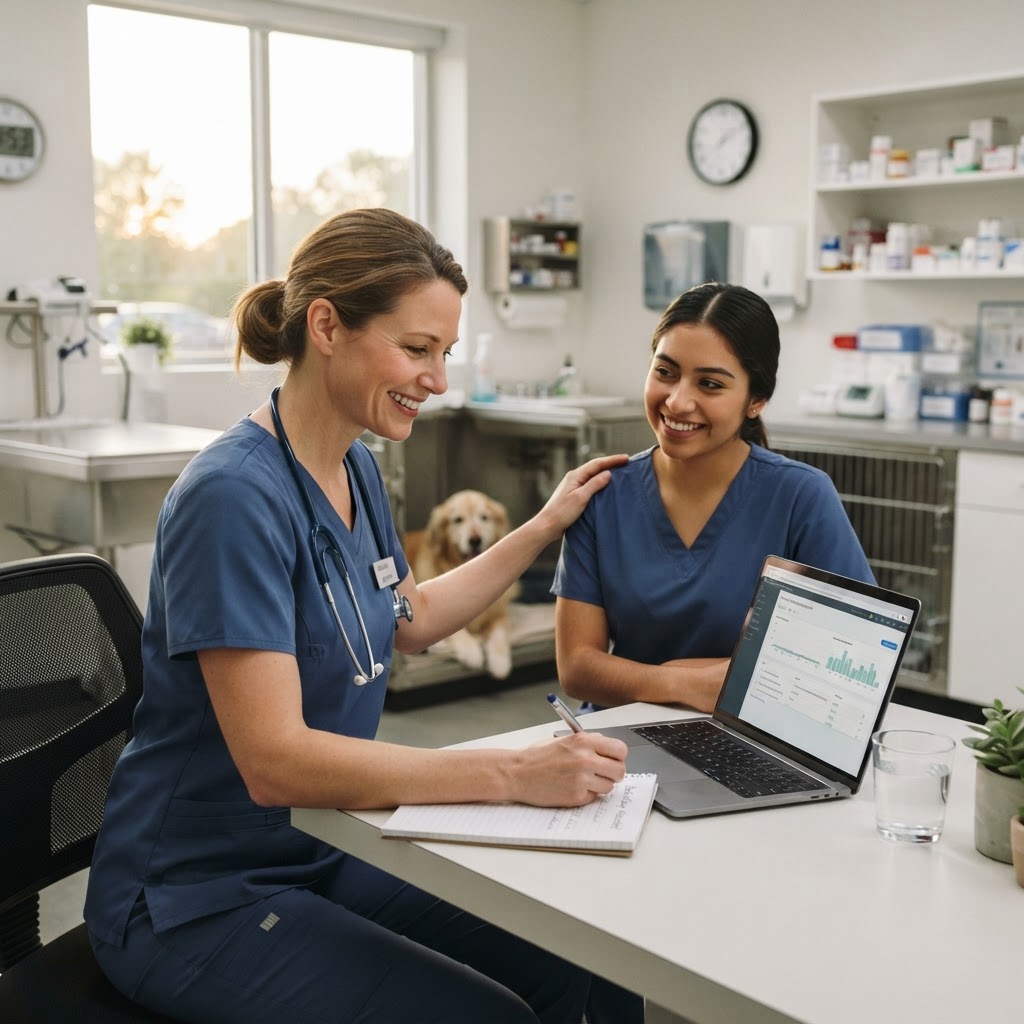
For many general practice clinics, the last hour of the day is the most stressful. A disorganized veterinary end-of-day workflow leads to rushed discharges, missed client communications, and veterinarians staying hours past closing to finish medical records. This 5 PM chaos is not just an inconvenience; it is a primary driver of team burnout and operational inefficiency.
Optimizing your veterinary end-of-day workflow requires shifting from a reactive scramble to a proactive, structured system. By distributing closing tasks throughout the day and standardizing how information is captured, GP teams can reclaim their evenings and improve patient care.
The Cost of a Broken Veterinary End-of-Day Workflow
When callbacks, follow-ups, and treatment updates live solely in a team member's head, they inevitably surface at the end of the day. Memory-based workflows collapse under the pressure of a busy GP schedule. According to industry data, inefficient practices lose 8 to 15 minutes per appointment compared to high-performing peers, a deficit that compounds into hours of delayed closing procedures.
Rework is one of the most expensive forms of workflow drag. If multiple people enter the same information, or handoffs require clarifying questions, delays compound quickly.
To see how your clinic compares to industry standards, use our GP Clinic Workflow Score tool.
4 Steps to Optimize Your Veterinary End-of-Day Workflow
1. Externalize Information to Reduce Cognitive Load
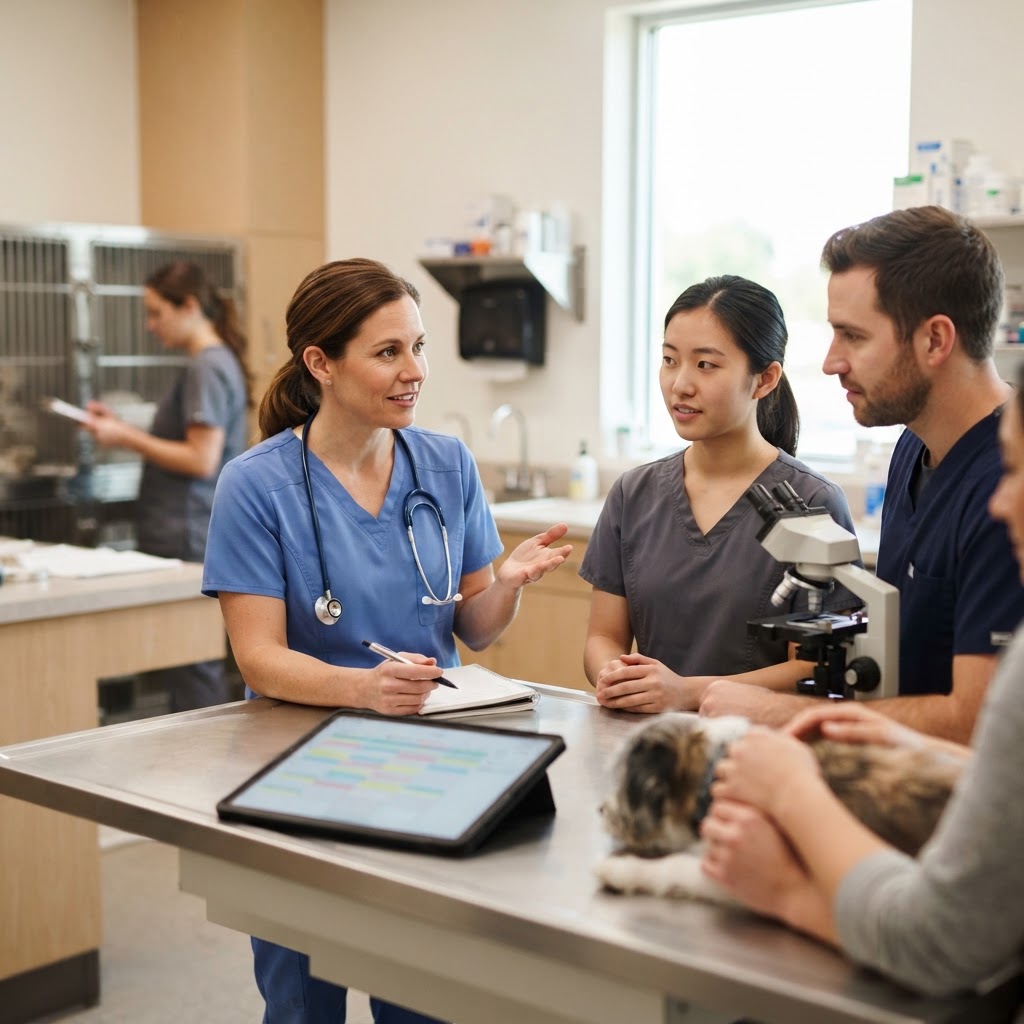
Efficient clinics build systems that show the full picture in real time. When information lives in the practice management system (PIMS) or on digital whiteboards instead of in minds, the team works with more clarity. Implement treatment boards with clear statuses, callback queues visible to the whole team, and consistent indicators for patients that are ready for discharge.
2. Implement Real-Time Documentation Standards
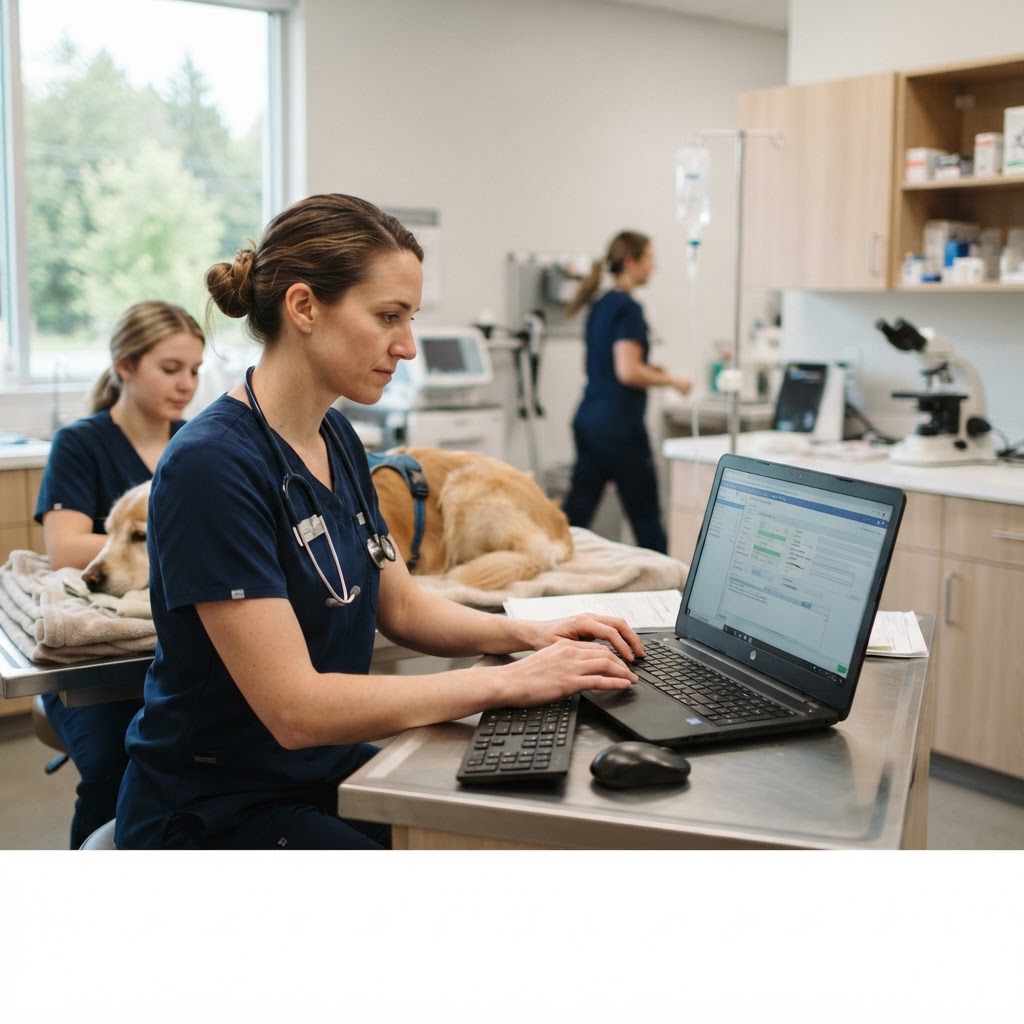
When DVMs reconstruct visits from memory hours later, accuracy drops and stress rises. Real-time documentation eliminates this cascade entirely. Require that subjective and objective notes be completed before the next patient is seen. Use standardized templates and leverage veterinary technicians to scribe or input preliminary data during the exam.
Where is your workflow slowing down?
Take the free 3-minute GP Clinic Workflow Score and see where your daily workflow is strong, where friction builds up, and what to improve first.
Get Your Workflow Score3. Standardize the Patient Discharge Process
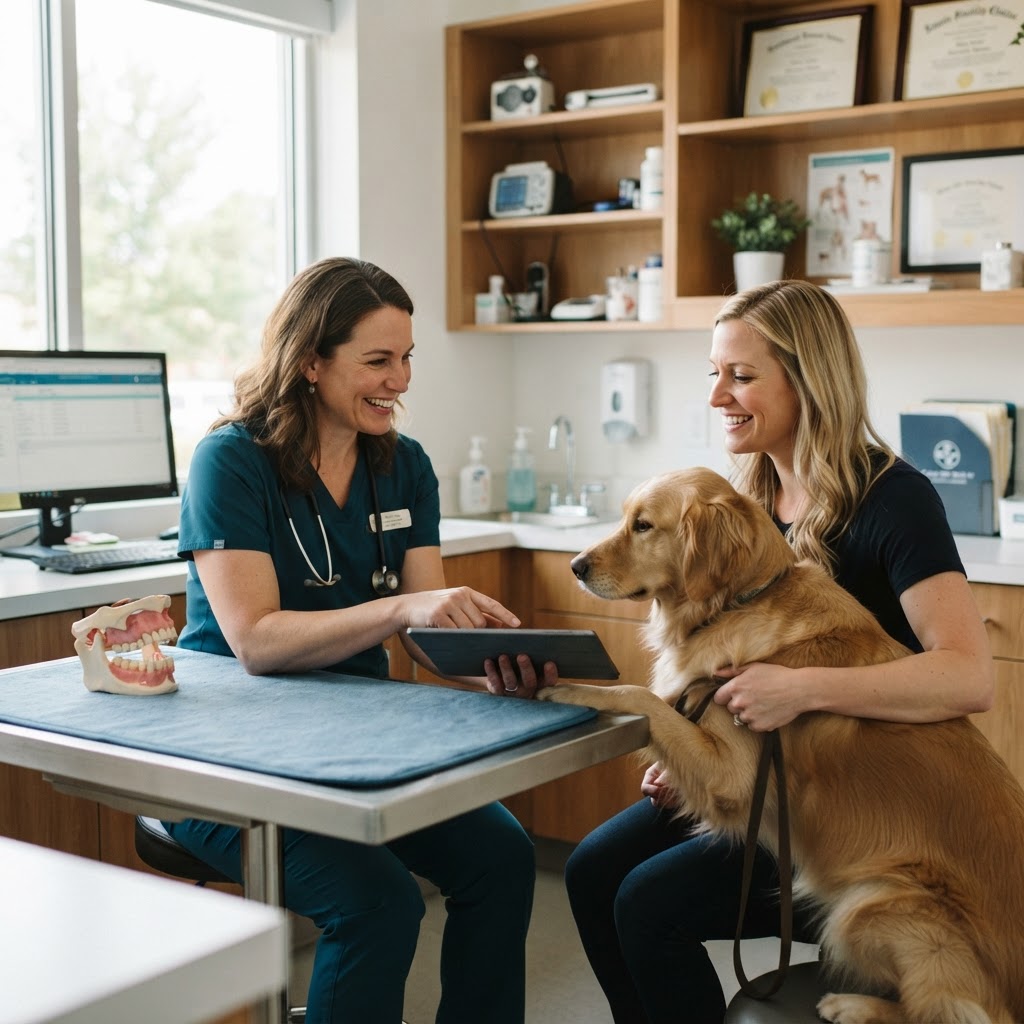
Discharges often bottleneck the front desk at 5 PM. To prevent this, prepare discharge instructions and medications as soon as the treatment is completed, not when the owner arrives. Ensure that written materials cover incision care, medication schedules, and emergency warning signs. A standardized discharge template ensures no steps are missed and reduces follow-up calls.
4. Shift Closing Tasks to Mid-Day Lulls
Not all closing tasks need to happen at closing. Shift inventory restocking, callback processing, and lab reconciliations to mid-day blocks. Assign specific roles to team members so that tasks are completed concurrently rather than sequentially at the end of the shift.
End-of-Day Workflow Checklist for GP Clinics
Implement this checklist to keep your team on track during the final two hours of operation:
- 2 Hours Before Close: Audit all open invoices and ensure lab samples are prepped for courier pickup.
- 1 Hour Before Close: Complete all non-urgent client callbacks and finalize prescription refills.
- 30 Minutes Before Close: Ensure all remaining discharges are staged with medications and printed instructions.
- At Closing: Reconcile the cash drawer, lock controlled substances, and verify all medical records for the day are locked.
For a broader look at your practice's operational health, benchmark your metrics using our GP Practice Benchmark Tool.
Measuring Workflow Efficiency
You cannot improve what you do not measure. Track the average time team members clock out versus their scheduled end time. Monitor the number of medical records left open past midnight. As you implement a structured veterinary end-of-day workflow, these metrics should steadily decrease, signaling a healthier, more efficient practice environment.

Helpful.vet Team
ContributorA veterinary professional contributing practical insights to Helpful.vet.
More about Helpful.vetFrequently asked questions
A well-optimized end-of-day workflow should take no more than 15 to 30 minutes after the last appointment. If your team is consistently staying longer, it indicates that tasks are bottlenecking at the end of the day rather than being distributed throughout the shift.
The most effective strategy is enforcing real-time documentation and utilizing veterinary technicians for data entry. Implementing standardized templates and dictation tools can also significantly reduce the time spent typing notes after hours.
Establish a clear triage protocol that defines what constitutes an emergency versus a next-day appointment. For true emergencies that arrive near closing, have a streamlined stabilization and transfer protocol to a local 24-hour facility to prevent your GP team from being trapped for hours.
Medical disclaimer: Helpful.vet provides educational and workflow-related information for veterinary professionals. It does not provide medical advice, diagnosis, or treatment recommendations. Clinical decisions should always be made by a licensed veterinarian using patient-specific history, examination findings, diagnostics, and professional judgment. See our full medical disclaimer.
Get more practical GP tools in your inbox
Short, useful resources for veterinary practice teams.