Veterinary Staff Onboarding: A Workflow Guide for GP Clinics
A structured onboarding process is critical for retaining veterinary staff and ensuring new hires integrate smoothly into your clinic's workflow. Discover practical steps to build an effective onboarding program.
By Helpful.vet Team
Why Veterinary Staff Onboarding Matters for GP Clinics
In today's tight veterinary job market, high turnover can crush productivity and increase stress in an already demanding environment. A structured veterinary staff onboarding process is essential for setting new hires up for success, reducing early burnout, and ensuring consistent patient care. According to recent industry data, proper onboarding helps new veterinarians and technicians spend less time second-guessing protocols and more time focusing on clinical duties.
When clinics lack a clear onboarding workflow, new team members often feel overwhelmed, leading to underutilization and frustration. By implementing a standardized approach, general practice (GP) teams can improve retention, boost confidence, and align new hires with the clinic's culture from day one.
Pre-Arrival Preparation: Setting the Stage
Effective veterinary staff onboarding begins before the new hire's first day. Taking care of formalities and logistical details in advance prevents confusion and helps the new employee feel prepared and welcomed.
- IT and Systems Access: Ensure all login credentials for the practice management software (PIMS), email, and communication tools are set up and tested.
- Uniforms and Equipment: Order scrubs, name tags, and any necessary equipment (like stethoscopes or dosimeter badges) ahead of time.
- Employee Manual: Provide the employee handbook prior to the start date. This allows the new hire to review practice policies, safety protocols, and expectations at their own pace.
The First Week: Orientation and Shadowing
The first week should focus on orientation, culture, and observing the clinic's workflow. Avoid throwing new hires directly into busy schedules without proper context.
Where is your workflow slowing down?
Take the free 3-minute GP Clinic Workflow Score and see where your daily workflow is strong, where friction builds up, and what to improve first.
Get Your Workflow Score- Warm Welcome and Clinic Tour: Introduce the new team member to the staff and provide a comprehensive tour of the facility, highlighting emergency exits, crash cart locations, and break areas.
- Discuss Practice Culture: Clearly communicate the clinic's core values, pace, and approach to client education.
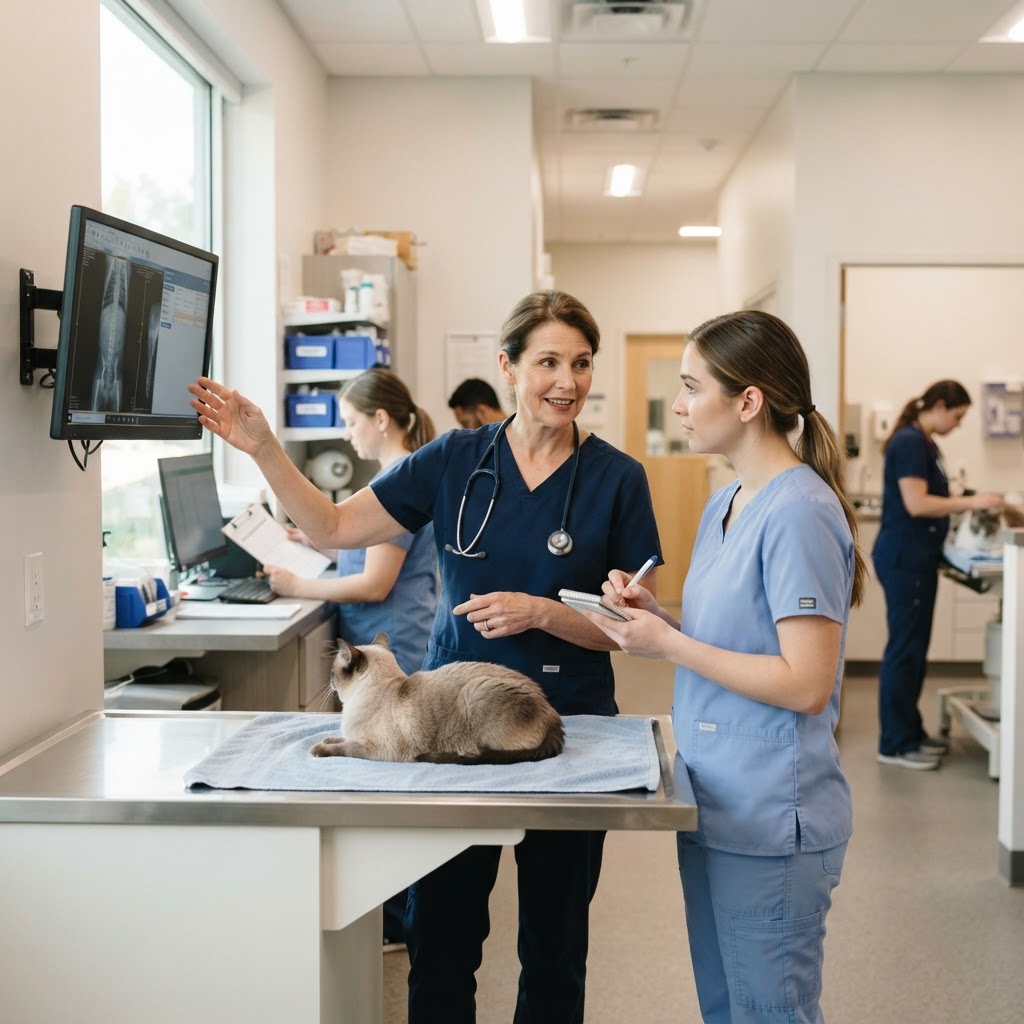
- Shadowing: Pair the new hire with an experienced mentor. For technicians, this means observing senior techs handling patients, running diagnostics, and managing workflow. For veterinarians, shadowing helps them understand the clinic's standard of care and appointment pacing.
Hands-On Training and Software Familiarization
Efficient use of practice management software is critical for scheduling, billing, and medical records. Provide hands-on training that covers daily workflows, starting with basic tasks and gradually introducing more advanced features.
For clinical skills, start small. Allow new technicians to begin with foundational tasks like cleaning exam rooms, restocking supplies, and assisting with restraint before moving on to complex procedures like IV placement or anesthesia monitoring. Proper technician utilization is vital; matching tasks to skill levels prevents frustration and maximizes clinic revenue.
Milestones and Constructive Feedback
A successful veterinary staff onboarding program includes regular check-ins and performance milestones for the first 30, 60, and 90 days. These check-ins help ensure the new hire is settling in and progressing smoothly.
- Provide Constructive Feedback: Acknowledge what the new hire is doing well and offer clear, practical suggestions when corrections are needed.
- Gradually Increase Responsibility: As confidence grows, transition the new hire from supervised tasks to independent work.
- Monitor for Burnout: The first few months can be stressful. Check in on their mental well-being and ensure they are taking adequate breaks.
To evaluate how your current processes are impacting team efficiency, consider using our GP Clinic Workflow Score tool.
Long-Term Retention and Mentorship
Onboarding doesn't end after the first month. Continuous mentorship and career development are the antidotes to burnout. Encourage experienced staff to take on teaching roles, which not only supports new hires but also empowers senior team members.
By investing time in a comprehensive veterinary staff onboarding workflow, GP clinics can build a resilient, efficient, and happy team that delivers exceptional care to patients and clients alike.

Helpful.vet Team
ContributorA veterinary professional contributing practical insights to Helpful.vet.
More about Helpful.vetFrequently asked questions
A comprehensive onboarding process typically lasts 90 days. This allows time for orientation, shadowing, hands-on training, and gradual increases in responsibility while ensuring the new hire feels fully supported.
Start with basic tasks like entering patient information and scheduling appointments. Pair the new hire with an experienced team member for hands-on guidance, and gradually introduce more advanced features as they gain confidence.
Provide a structured training roadmap, assign a dedicated mentor, and start with foundational tasks before increasing responsibility. Regular check-ins and constructive feedback also help build confidence and reduce anxiety.
Medical disclaimer: Helpful.vet provides educational and workflow-related information for veterinary professionals. It does not provide medical advice, diagnosis, or treatment recommendations. Clinical decisions should always be made by a licensed veterinarian using patient-specific history, examination findings, diagnostics, and professional judgment. See our full medical disclaimer.
Get more practical GP tools in your inbox
Short, useful resources for veterinary practice teams.