Veterinary Weight Management Workflow: A Guide for GP Clinics
Pet obesity affects over half of all dogs and cats, yet many GP clinics struggle to implement consistent weight loss programs. Discover how to build a practical, tech-led veterinary weight management workflow that improves patient outcomes and client compliance without overwhelming your schedule.
By Helpful.vet Team
With data suggesting that over half of dogs and cats in the United States are overweight or obese, addressing pet weight is no longer optional for general practice teams. However, discussing a pet's weight can be uncomfortable, and managing a long-term weight loss plan can drain already limited clinic resources. To tackle this epidemic effectively, clinics need a structured veterinary weight management workflow. By standardizing how your team assesses body condition, communicates with clients, and schedules follow-ups, you can transform weight management from a frustrating chore into a rewarding, revenue-generating preventive care service.
The Role of the Veterinary Team in Pet Obesity
Successful weight management requires a team-based approach. Veterinarians diagnose obesity and prescribe therapeutic diets, but veterinary technicians and nurses are the engine that drives the veterinary weight management workflow. Empowering your support staff to lead weight management clinics not only frees up doctor time but also provides clients with the consistent education, support, and accountability they need to succeed.
Shifting to a Tech-Led Model
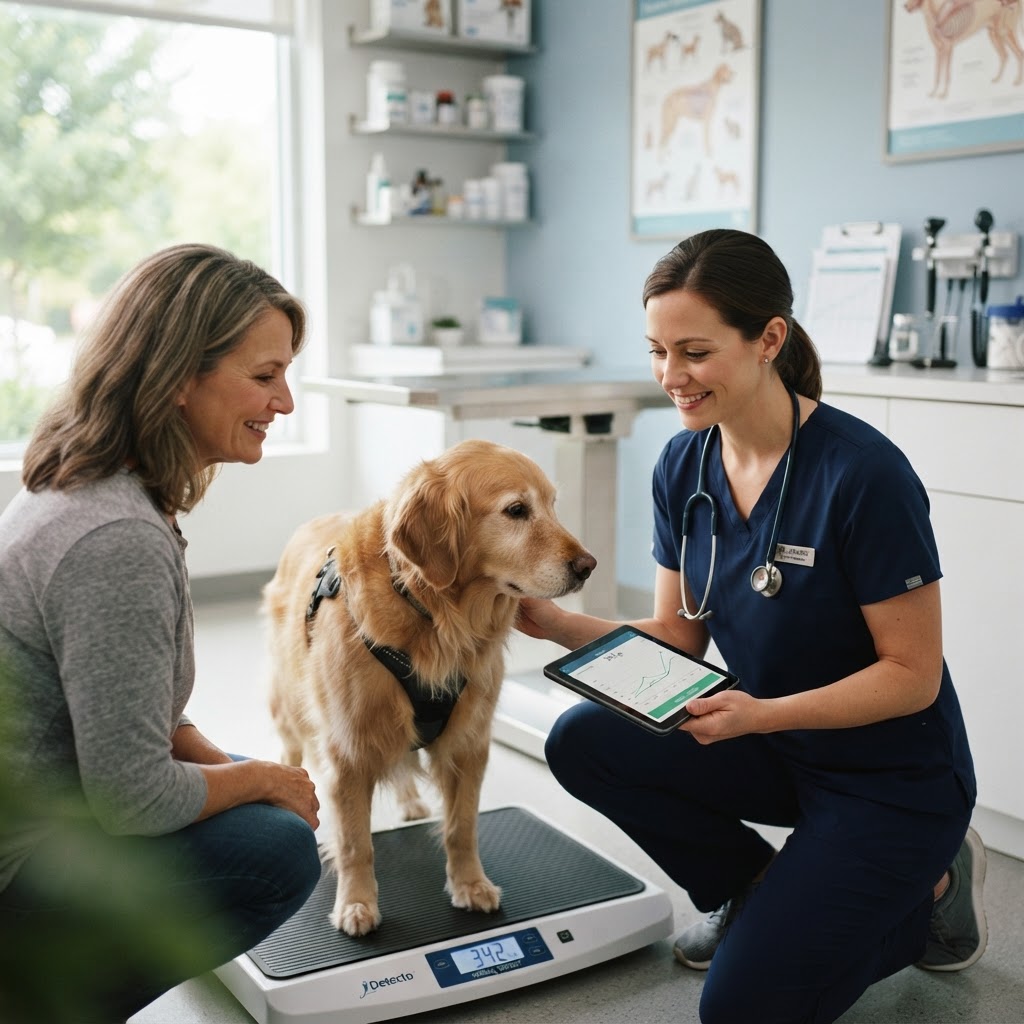
A tech-led model allows for more involved and closely followed individual weight management programs. Technicians can calculate daily caloric intake, demonstrate proper food measurement, and conduct monthly weigh-ins. Before implementing this model, ensure your team has standardized training in communication skills, nutritional knowledge, and behavioral modification strategies. You can evaluate your team's current consistency using our Standard of Care Self-Check.
Step-by-Step Veterinary Weight Management Workflow
Creating a repeatable workflow ensures that no patient falls through the cracks. Here is a practical, four-step veterinary weight management workflow designed for busy GP clinics.
Step 1: Consistent Nutritional Assessment
The American Animal Hospital Association (AAHA) guidelines emphasize that nutritional assessment should be the fifth vital sign, alongside temperature, pulse, respiration, and pain. Every patient should receive a Body Condition Score (BCS) and a muscle condition score at every visit. Using a 9-point BCS system is highly recommended. In this system, a score of 4 or 5 is ideal, and each point greater than 5 equals approximately 10% excess weight. Documenting this score in the electronic medical record (EMR) triggers the next step in the workflow.
Step 2: Calculating Ideal Weight and Caloric Needs
Once the veterinarian diagnoses the pet as overweight, the technician takes over to calculate the ideal body weight and daily caloric requirements for weight loss. It is crucial to recommend a veterinary therapeutic weight-loss diet rather than simply reducing the volume of an over-the-counter maintenance diet. Maintenance diets are formulated to meet nutritional needs at a specific caloric intake; restricting them can lead to dangerous nutrient deficiencies. A safe and realistic target weight loss rate is generally 1% to 2% of body weight per week.
Where is your workflow slowing down?
Take the free 3-minute GP Clinic Workflow Score and see where your daily workflow is strong, where friction builds up, and what to improve first.
Get Your Workflow ScoreStep 3: Client Communication and Goal Setting
Effective communication is the cornerstone of client compliance. Avoid judgmental language; instead, frame the conversation around the pet's mobility, joint health, and longevity. Set realistic expectations. If a dog needs to lose 10 pounds at a rate of 1% to 2% per week, explain that the process could take 6 to 12 months. Provide written instructions detailing the exact amount of food to feed in grams or specific measuring cups, as a generic "cup" can vary wildly depending on how the kibble settles. To assess how well your team handles these conversations, consider using our Client Communication Score tool.
Step 4: Follow-Up and Monitoring
A weight loss plan without follow-up is destined to fail. Your veterinary weight management workflow must include scheduled touchpoints. A best practice is to have a technician call the client within two weeks of the initial visit to see how the pet is adapting to the new diet. Schedule monthly in-clinic weigh-ins and BCS assessments. These brief, 10-minute technician appointments keep the client accountable and allow the team to recalculate daily caloric intake if the pet hits a weight loss plateau.
Overcoming Common Client Compliance Barriers
Even with a perfect workflow, clients will face challenges at home. Anticipating these barriers and providing proactive solutions will significantly improve your success rate.
The 10% Treat Rule
Many pets carry extra weight simply because they receive too many snacks. Teach clients the "10% Rule": treats should make up no more than 10% of a pet's daily caloric intake. Provide a list of low-calorie, safe alternatives, such as baby carrots, green beans, or plain air-popped popcorn. This allows owners to maintain the human-animal bond through treating without wrecking the diet.
Measuring Food Accurately
Demonstrate how to measure food during the clinic visit. Encourage clients to use a kitchen scale to weigh kibble in grams, as this is far more accurate than using a measuring cup. If a scale is not feasible, provide a standardized measuring cup and physically show the client what a "level cup" looks like compared to a "heaping cup."
Measuring Success in Your Clinic
To ensure your veterinary weight management workflow is effective, track key performance indicators (KPIs) such as the percentage of patients with a recorded BCS, the number of therapeutic diet bags sold, and the attendance rate for monthly weigh-in appointments. By standardizing this process, your GP clinic can improve patient health, boost team morale by utilizing technician skills, and build stronger, more trusting relationships with pet owners.

Helpful.vet Team
ContributorA veterinary professional contributing practical insights to Helpful.vet.
More about Helpful.vetFrequently asked questions
Many clinics offer the initial nutritional consultation as part of the annual exam fee, while charging a nominal fee for monthly technician weigh-in appointments. Alternatively, some practices bundle the cost of monthly rechecks into a comprehensive weight loss package that includes the first bag of therapeutic diet.
Best practices suggest a follow-up phone call two weeks after starting the diet, followed by in-clinic weigh-ins every 4 weeks. Monthly rechecks allow the veterinary team to adjust caloric intake if weight loss stalls and provide ongoing encouragement to the client.
Frame the conversation around the pet's overall health, mobility, and longevity rather than appearance. Use objective tools like the Body Condition Score (BCS) chart to show the client where their pet stands compared to the ideal, making the assessment medical rather than personal.
Maintenance diets are formulated to provide essential nutrients based on a specific daily caloric intake. If an owner simply feeds less of a maintenance diet to achieve weight loss, they risk causing dangerous vitamin, mineral, and protein deficiencies in their pet.
Medical disclaimer: Helpful.vet provides educational and workflow-related information for veterinary professionals. It does not provide medical advice, diagnosis, or treatment recommendations. Clinical decisions should always be made by a licensed veterinarian using patient-specific history, examination findings, diagnostics, and professional judgment. See our full medical disclaimer.
Get more practical GP tools in your inbox
Short, useful resources for veterinary practice teams.