Optimizing Your Veterinary Euthanasia Workflow in GP Clinics
A practical guide for general practice veterinary teams to optimize their euthanasia workflow, focusing on client communication, team training, and clinical protocols.
By Helpful.vet Team
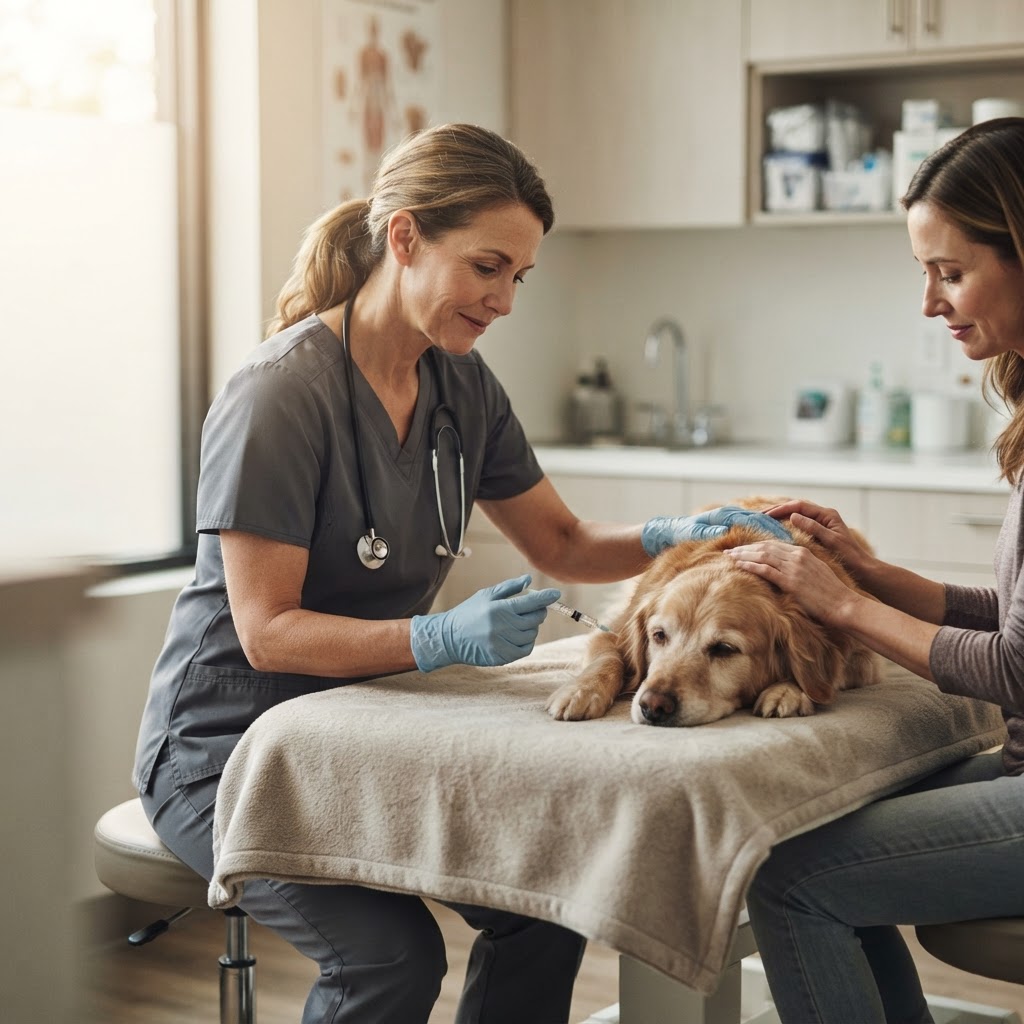
Managing end-of-life care is one of the most challenging yet essential services provided by general practice veterinary teams. A standardized veterinary euthanasia workflow ensures that patients experience a peaceful passing, clients feel supported, and veterinary staff are protected from unnecessary operational stress and compassion fatigue. By refining your clinic's protocols from the initial phone call to post-appointment follow-up, you can elevate the standard of care and improve overall clinic efficiency.
Pre-Appointment: Scheduling and Preparation
The veterinary euthanasia workflow begins long before the client enters the exam room. How your front desk team handles the initial scheduling sets the tone for the entire experience.
Compassionate Scheduling
When a client calls to schedule a euthanasia appointment, empathy and efficiency must go hand in hand. Support staff should be trained to gather all necessary information upfront so the client does not have to repeat painful details later.
- Express empathy immediately: Train staff to use phrases like, "I am so sorry you are facing this decision."
- Gather details early: Confirm the pet's name, current condition, and the client's preferences for memorial items and body care during the initial call.
- Handle logistics: Discuss pricing and process payment over the phone or immediately upon arrival to prevent the client from having to stand at the front desk while grieving.
To evaluate how well your front desk handles these sensitive interactions, consider using our Client Communication Score tool.
Room Setup and Arrival
Preparation is critical to minimizing wait times and reducing anxiety for both the pet and the client.
- Designated parking: If possible, direct the client to park in a designated spot near the entrance.
- Immediate rooming: Have a team member meet the client at their car or the front door and escort them directly into a prepared exam room.
- Room preparation: Ensure the room is equipped with soft lighting, comfortable seating, waterproof pads, and all necessary paperwork already dated and ready for signature.
During the Appointment: Clinical and Communication Protocols
Once the client and patient are in the room, the clinical team must execute the veterinary euthanasia workflow with precision and deep compassion.
Sedation and The Procedure
Clinical best practices strongly recommend the use of pre-euthanasia sedation to ensure a smooth, pain-free transition. According to industry guidelines, intramuscular or subcutaneous sedation is crucial for the client's experience, preventing the sudden shift from consciousness to unconsciousness that can occur with IV-only protocols.
Where is your workflow slowing down?
Take the free 3-minute GP Clinic Workflow Score and see where your daily workflow is strong, where friction builds up, and what to improve first.
Get Your Workflow Score- Prepare medications in advance: The veterinarian or vet tech should enter the room with sedation and euthanasia solutions already drawn up in syringes.
- Explain the process: Briefly and gently explain what will happen, including potential postmortem side effects like agonal breathing or muscle twitching. Use normalizing language, such as explaining that an agonal breath is simply a diaphragm spasm.
- Assess the patient: Make a visual assessment and reassure the owner that they are making the right decision, alleviating any lingering guilt.
Client Communication During the Process
Effective communication during the procedure requires reading the room. Some clients want to hold their pet, while others prefer to step back. The veterinarian should remain present in the room until the pet has passed, unless the owner specifically requests time alone. A gentle touch on the shoulder or hand often conveys more empathy than words.
Post-Appointment: Memorials and Follow-Up
The workflow does not end when the procedure is complete. Post-appointment protocols are vital for client retention and team closure.
Memorial Items and Body Care
Handling the patient's body with the utmost respect is non-negotiable. Offer memorial items such as clay paw prints or a lock of fur. Providing these items at no extra charge before the client leaves can offer a small moment of comfort. Additionally, provide a dignified bag for the pet's collar and leash so the client does not have to walk through the lobby holding them empty.
Client Follow-Up
A structured follow-up process demonstrates lasting care and builds immense client loyalty.
- Next-day phone call: A brief check-in call from the attending veterinarian exceeds expectations and provides closure.
- Sympathy cards: Ensure that sympathy cards are signed by all staff members who interacted with the pet, complete with personalized, handwritten messages.
Team Training and Compassion Fatigue
A well-defined veterinary euthanasia workflow also protects your team. Euthanasia is a known contributor to compassion fatigue in veterinary medicine.
Standardizing the Veterinary Euthanasia Workflow
Consistency helps everyone know what to expect. All personnel should witness a properly conducted euthanasia appointment before being expected to assist with one. Regular team meetings should review protocols, update training manuals, and ensure that every staff member understands their specific role in the workflow. You can audit your current processes using our GP Clinic Workflow Score.
Managing Compassion Fatigue
Open communication is essential for team health. Discuss triggers that cause stress during euthanasia appointments. If a specific task, such as quoting cremation prices, is too difficult for a particular staff member, reassign that duty. Empowering your team to share their emotional load ensures a healthier, more resilient practice.

Helpful.vet Team
ContributorA veterinary professional contributing practical insights to Helpful.vet.
More about Helpful.vetFrequently asked questions
Train your front desk staff to gather all necessary information, including body care preferences and payment, during the initial phone call. This prevents the grieving client from having to handle administrative tasks in the lobby.
Best practices strongly recommend administering intramuscular or subcutaneous sedation prior to the euthanasia solution. This ensures the patient is completely relaxed and unconscious, providing a more peaceful experience for both the pet and the client.
Hold regular team meetings to discuss emotional triggers and allow staff to step away from specific tasks if they become overwhelming. Providing clear, standardized workflows also reduces the operational stress associated with end-of-life appointments.
It is highly recommended to handle all billing and paperwork either over the phone during scheduling or immediately upon the client's arrival in the exam room. This allows the client to leave the clinic directly after the procedure without stopping at the front desk.
Medical disclaimer: Helpful.vet provides educational and workflow-related information for veterinary professionals. It does not provide medical advice, diagnosis, or treatment recommendations. Clinical decisions should always be made by a licensed veterinarian using patient-specific history, examination findings, diagnostics, and professional judgment. See our full medical disclaimer.
Get more practical GP tools in your inbox
Short, useful resources for veterinary practice teams.