Pet Insurance Claims Workflow: A Guide for GP Clinics
Discover practical strategies to optimize your veterinary clinic's pet insurance claims workflow. Learn how to reduce administrative bottlenecks, standardize documentation, and implement efficient direct-pay processes to save your team hours each week.
By Helpful.vet Team
As pet insurance adoption continues to grow, general practice veterinary clinics are facing a double-edged sword. On one hand, insured clients are highly valuable; data indicates that 73% of insured dog owners and 43% of insured cat owners visit their veterinarians more frequently ([Free Pet Insurance Content Pack for Veterinary Clinics](https://petdesk.com/resources/free-pet-insurance-content-pack-for-veterinary-clinics)). On the other hand, the administrative burden of processing these claims is overwhelming clinic staff. A poorly optimized pet insurance claims workflow leads to delayed payouts, frustrated clients, and burned-out veterinary teams.
To survive and thrive in the current veterinary landscape, clinics can no longer rely on manual data entry and fragmented web portals. Treating insurance as a core component of your daily operations—rather than an afterthought—is essential for maintaining profitability and team morale. This comprehensive guide will walk you through the steps to optimize your pet insurance claims workflow, from front-desk intake to final reconciliation.
The True Cost of a Fragmented Claims Workflow
Pet insurance claims processing is frequently cited as a top administrative frustration for veterinary professionals. With the average claim value rising and practices processing hundreds of claims annually across multiple insurers, the traditional workflow is breaking down. When your team has to log into five different portals, fill out redundant forms, and chase down missing medical records, the hidden costs multiply rapidly.
Inefficient workflows result in:
- Wasted Staff Hours: Customer Service Representatives (CSRs) and veterinary technicians spend hours each week on hold with insurance companies or manually typing data into third-party portals.
- Delayed Patient Care: When pre-approvals take days instead of minutes, critical treatments are delayed, impacting patient outcomes.
- Revenue Leakage: Denied claims due to clerical errors or missed submission deadlines directly impact the client's wallet, which in turn reduces their willingness to accept future treatment plans.
- Team Burnout: The repetitive, high-friction nature of manual claims processing contributes significantly to administrative fatigue.
To assess how much administrative drag is currently affecting your practice, consider utilizing our GP Clinic Workflow Score tool to identify specific bottlenecks in your daily operations.
Step-by-Step: Optimizing Your Pet Insurance Claims Workflow
Transforming your claims process requires a systematic approach that touches every phase of the patient journey. By standardizing protocols and leveraging technology, you can move your clinic closer to a "one-click submission" reality.
1. Pre-Appointment Intake and Flagging
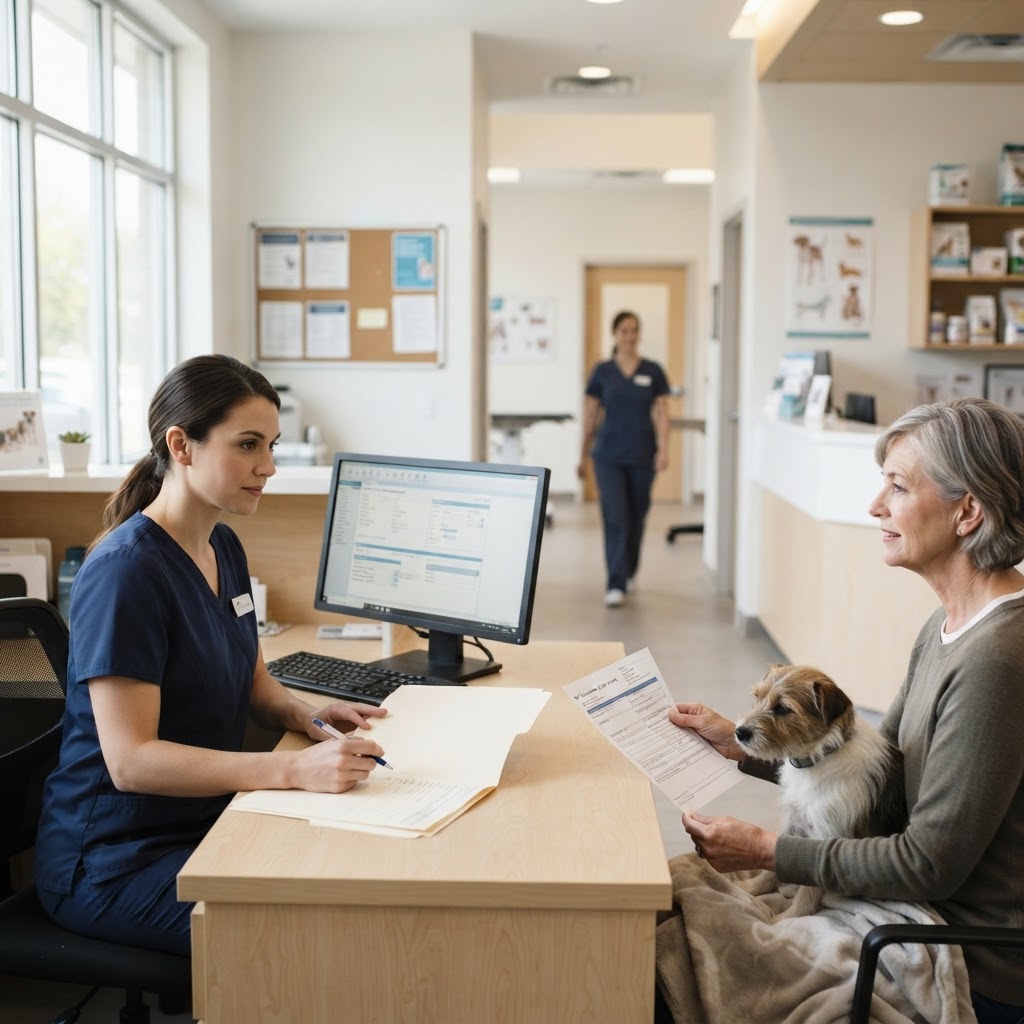
The claims workflow should begin before the patient ever walks through the door. The goal is to eliminate surprises at checkout by gathering all necessary insurance information upfront.
- Update Intake Forms: Ensure your digital and physical intake forms explicitly ask for pet insurance details. Instead of asking, "Do you have pet insurance?" train your team to ask, "Who is your pet insurance provider?" This normalizes the concept and prompts clients to provide policy numbers immediately.
- PIMS Flagging: Once a client's insurance status is confirmed, flag their profile in your Practice Management Information System (PIMS). This visual cue alerts the entire team—from the vet tech taking the history to the veterinarian writing the notes—that documentation must meet insurance standards.
- Pre-Verification: For high-cost procedures (e.g., dental surgeries, mass removals), have your CSR team verify coverage limits and pre-approvals days before the appointment.
2. Standardizing Clinical Documentation (SOAP Notes)
The number one reason for claim delays and denials is inconsistent or incomplete medical records. Insurance adjusters look for specific data points, and if they are missing, the claim is kicked back to your clinic.
Veterinarians play a crucial role in this phase. As noted by industry experts, it is vital to date everything accurately and ensure symptom onset dates match across all notes, as inconsistencies can trigger delays while insurers investigate ([How Veterinarians Can Help Clients Get Claims Processed Faster - Lemonade](https://www.lemonade.com/pet/explained/veterinarians-role-in-pet-insurance-claims/)).
- Establish a Single Onset Date: Train your clinical team to establish a clear symptom onset date during the history-taking phase and stick to it. If a client says the dog started limping "about a week ago," document the specific calculated date and use it consistently in all subsequent rechecks.
- Use Macros and Templates: Leverage keyboard shortcuts and macros within your PIMS to populate standard charts and notes. This speeds up the daily workflow and ensures that no critical details are omitted ([Hacks to improve your veterinary practice efficiency - Vetsource](https://vetsource.com/blog/5-time-saving-hacks-for-short-staffed-veterinary-practices)).
- Separate Preventative vs. Illness: Clearly delineate routine wellness care from illness/injury diagnostics in your invoices. Many policies cover one but not the other, and bundled line items confuse adjusters.
3. Shifting to One-Click PIMS Integration
To survive the modern veterinary landscape, you cannot rely on staff logging into individual web portals. You need a PIMS that treats insurance as a data field, not a separate workflow ([Pet Insurance Claims Are Eating Vet Admin Time: The 26 Practice Fix | Project5pi](https://project5pi.com/blog/posts/veterinary-pet-insurance-billing-2026)).
Where is your workflow slowing down?
Take the free 3-minute GP Clinic Workflow Score and see where your daily workflow is strong, where friction builds up, and what to improve first.
Get Your Workflow ScoreModern practice management software often includes direct integrations with major pet insurance providers. When a workflow is fully integrated, the process looks like this:
- The veterinarian finalizes the SOAP notes and signs the chart.
- The CSR generates the final invoice at checkout.
- With a single click within the PIMS, the invoice, medical records, and claim form are securely transmitted to the insurer's API.
- The client receives an immediate confirmation email from their insurer.
If your current software does not support this, it is highly recommended to evaluate third-party integration tools or consider a PIMS upgrade during your next technology audit.
4. Implementing Direct-Pay Workflows
Historically, pet insurance operated strictly on a reimbursement model: the client pays the clinic in full, submits a claim, and waits weeks for a check. Today, direct-pay workflows are revolutionizing the industry. In a direct-pay model, the insurance company pays the veterinary clinic directly, meaning the client only pays their deductible and co-pay at checkout.
This model significantly reduces financial friction and increases case acceptance for expensive treatments. For example, platforms like GapOnly are used in around 85% of Australian veterinary clinics as part of everyday clinical workflows, processing thousands of claims in real time ([A connected approach to veterinary payments and claiming](https://www.tyrohealth.com/blog/connected-payments-and-claiming-for-vet-clinics)).
To implement direct-pay:
- Partner with Compatible Insurers: Identify which major insurers in your region offer direct-vet payments (e.g., Trupanion, Pets Best).
- Train the Front Desk: CSRs must understand how to initiate a pre-approval or real-time claim before the client leaves the lobby.
- Manage Expectations: Clearly communicate to clients that if a direct-pay claim is denied after the fact, they are still responsible for the balance. Have them sign a financial consent form acknowledging this policy.
Mastering the Reconciliation Process
When you shift toward direct-pay models, your bookkeeping complexity increases. You are no longer just tracking client payments; you are tracking outstanding insurance payouts. A robust pet insurance reconciliation process is non-negotiable to prevent revenue leakage.
- Weekly Audits: Designate a specific team member (usually the practice manager or lead CSR) to run a weekly aging report specifically for insurance claims.
- Match Payouts to Invoices: When bulk payments arrive from insurers, they must be meticulously matched to individual patient invoices in your PIMS. Do not simply log a lump sum into your accounting software without itemizing it.
- Handle Denials Promptly: If a claim is denied or partially paid, the reconciliation team must immediately investigate. Was it a coding error? Missing notes? If the denial is valid, the balance must be promptly transferred to the client's ledger, and a polite, clear communication must be sent to the client.
Effective communication during a claim denial is critical to maintaining trust. If your team struggles with delivering difficult financial news, consider evaluating your protocols using our Client Communication Score tool.
Training Your Team on Insurance Protocols
Even the best technology will fail if your team is not aligned. Pet insurance workflows require cross-departmental cooperation. Create a standardized Standard Operating Procedure (SOP) binder specifically for insurance handling.
Front Desk (CSR) Responsibilities:
- Capture policy details during appointment booking.
- Verify active coverage for high-ticket procedures.
- Submit claims via PIMS integration before the client leaves the building.
- Educate uninsured clients on the benefits of coverage using educational one-pagers.
Clinical Team (DVMs and Techs) Responsibilities:
- Document exact symptom onset dates.
- Ensure all diagnostic codes match the written narrative.
- Finalize and lock charts by the end of the shift to prevent submission delays.
Quarterly audits of these SOPs are essential. When a triage form isn't updated, or an inventory process lives only in someone's head, errors multiply, leading to duplicate work and uneven client experiences ([Veterinary Practice Management: The Modern 201 Guide](https://co.vet/post/veterinary-practice-management/)).
Conclusion
Optimizing your pet insurance claims workflow is no longer a luxury; it is an operational necessity for busy general practice clinics. By standardizing clinical documentation, leveraging one-click PIMS integrations, and exploring direct-pay models, you can drastically reduce the administrative burden on your staff. The result is a more efficient clinic, a happier veterinary team, and clients who are empowered to say "yes" to the best possible care for their pets.

Helpful.vet Team
ContributorA veterinary professional contributing practical insights to Helpful.vet.
More about Helpful.vetFrequently asked questions
The most effective way is to integrate claims processing directly into your Practice Management Information System (PIMS). Moving from manual web portal entries to one-click submissions reduces data entry errors and saves significant administrative time. Additionally, standardizing SOAP notes ensures insurers have the exact information they need immediately.
A direct-pay workflow allows the veterinary clinic to submit a claim at checkout and receive payment directly from the insurance company, rather than making the client pay upfront and wait for reimbursement. This requires specific software integrations and agreements with insurers, but it significantly increases client acceptance of comprehensive treatment plans.
Inconsistencies in symptom onset dates are a primary cause of claim delays and denials. Train your veterinary team to establish and document a single, clear onset date during the initial triage or history-taking phase. Use standardized templates or macros in your PIMS to ensure this date remains consistent across all subsequent notes and claim submissions.
Yes, asking 'Who is your pet insurance provider?' rather than 'Do you have pet insurance?' normalizes the concept and ensures your team captures policy details early. Documenting this in the patient's file before the exam allows the clinical team to tailor their communication and streamlines the checkout process.
Medical disclaimer: Helpful.vet provides educational and workflow-related information for veterinary professionals. It does not provide medical advice, diagnosis, or treatment recommendations. Clinical decisions should always be made by a licensed veterinarian using patient-specific history, examination findings, diagnostics, and professional judgment. See our full medical disclaimer.
Get more practical GP tools in your inbox
Short, useful resources for veterinary practice teams.