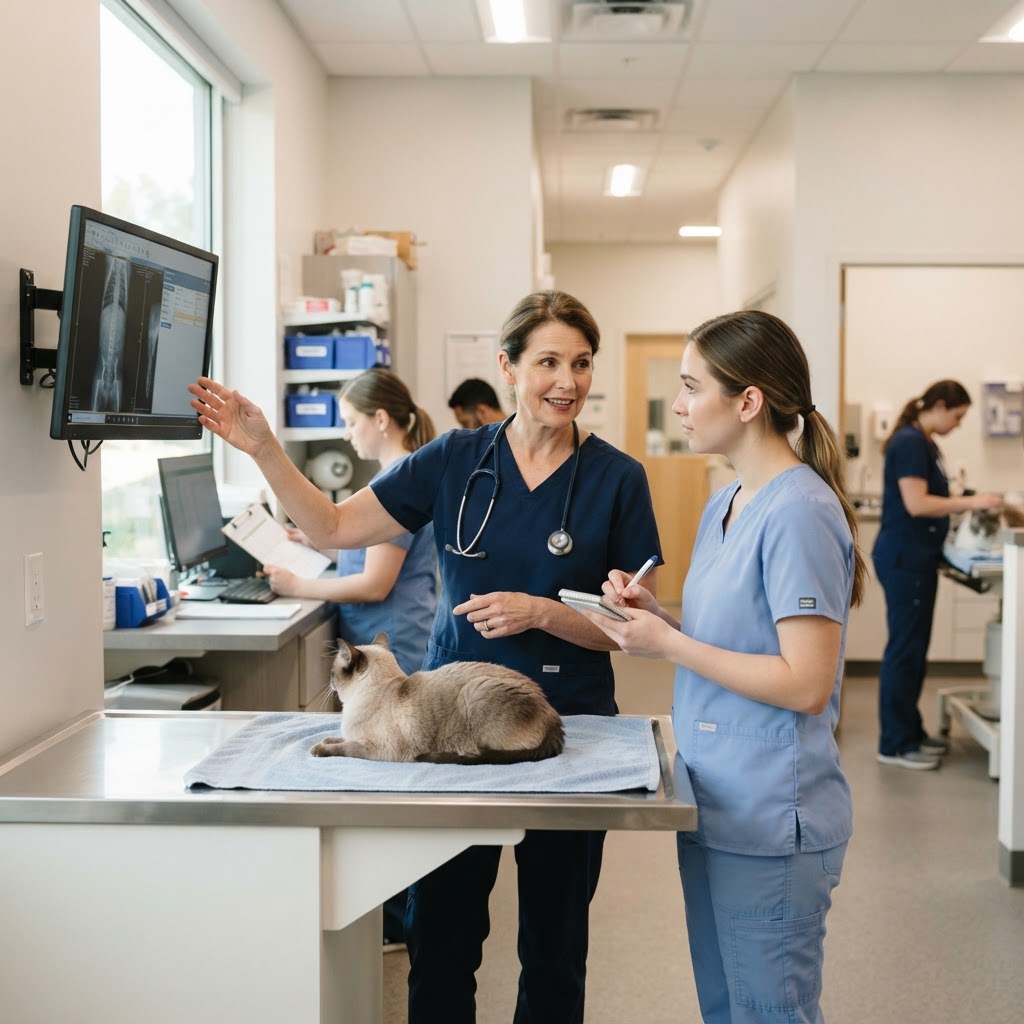
Veterinary Inventory Management: A Practical Guide for GP Clinics
Inventory is typically the second-largest expense for a veterinary clinic. Learn how to optimize your veterinary inventory management, reduce waste, and improve turnover rates with practical workflows for GP teams.
By Helpful.vet Team

Effective veterinary inventory management is one of the most critical, yet frequently overlooked, components of running a successful general practice. For most clinics, inventory represents the second-largest expense category after payroll, typically consuming 20% to 25% of gross revenue. When managed poorly, it becomes a silent drain on profitability, tying up cash in excess stock, leading to expired medications, and causing frustrating stockouts that disrupt patient care.
According to industry data, inefficiencies such as daily stock ordering, margin leakage, holding excess stock, and wasted staff time can cost a practice tens of thousands of dollars per veterinarian annually. Beyond the financial impact, clunky inventory systems distract veterinary technicians and support staff from their primary focus: patient care and client communication.
This guide provides a comprehensive, step-by-step approach to optimizing your veterinary inventory management. By implementing data-driven workflows, establishing clear team roles, and leveraging modern technology, your GP team can reduce waste, improve cash flow, and ensure that critical supplies are always available when needed.
The Financial Impact of Inventory Mismanagement
Every item sitting on your pharmacy shelf or in your supply closet represents tied-up capital. When inventory is not actively managed, clinics typically experience financial losses through three primary channels:
- Revenue Leakage: This occurs when medications or supplies are dispensed or used during treatments but are never invoiced to the client. Without strict tracking, these missed charges quickly compound.
- Shrinkage and Expiration: Products that expire before they can be used, or items that are lost, damaged, or stolen, represent a total loss of the initial investment. Studies suggest that average practices lose 5% to 15% of their inventory value to these factors.
- Over-ordering: Fear of running out of critical supplies often drives teams to over-order. While this prevents stockouts, it severely restricts cash flow that could be better invested in staff training, new equipment, or facility upgrades.
"Veterinary practices typically spend 20-25% of revenue on inventory. Poor inventory management leads to expired medications, stockouts during critical moments, tied-up capital, and lost revenue from untracked dispensing."
To see how your current overhead and inventory costs compare to industry standards, you can use our GP Practice Benchmark Tool.
Core Inventory Metrics Every GP Clinic Should Track
You cannot manage what you do not measure. To gain control over your veterinary inventory management, your practice leadership must track a few key performance indicators (KPIs) on a regular basis.
Inventory Turnover Ratio
The inventory turnover ratio measures how many times your clinic sells and replaces its entire inventory over a specific period (usually a year). A higher turnover rate generally indicates efficient management and strong sales, while a low rate suggests overstocking or dead stock.
Formula: Cost of Goods Sold (COGS) / Average Inventory Value
Benchmark: The ideal inventory turnover rate for a general practice is 8 to 12 times per year. However, due to space constraints and ordering habits, many average clinics hover around 6 to 8 turns per year. If your turnover is below 6, you are likely holding too much stock.
Dead Stock Percentage
Dead stock refers to items that have not been used or sold in the past 6 to 12 months. These items take up valuable shelf space and are at high risk of expiring.
Benchmark: Dead stock should represent less than 5% of your total inventory value. Regular audits are required to identify these items so they can be returned to the vendor (if possible), discounted, or donated before they expire.
Service Level (Fill Rate)
This metric tracks how often you have the required item in stock when a patient needs it. While you want to keep inventory lean, you cannot compromise patient care.
Benchmark: Aim for a service level of 97% or higher for critical, life-saving medications and high-volume consumables.
A 5-Step Inventory Workflow for GP Teams
Transforming your veterinary inventory management requires moving away from "eyeballing" the shelves and moving toward a structured, predictable workflow. Implement the following five steps to standardize your process.
Step 1: Categorize and Consolidate
Not all inventory is created equal. Use the ABC analysis method to categorize your stock based on value and usage:
- A-Items (High Value / High Usage): These are your top 20% of items that account for 80% of your inventory spend (e.g., monthly preventatives, expensive NSAIDs, specialized diets). These require strict tracking and frequent ordering.
- B-Items (Moderate Value / Moderate Usage): Standard antibiotics, common surgical supplies, and routine vaccines. These require regular monitoring but less frequent ordering than A-items.
- C-Items (Low Value / Low Usage): Paper towels, basic bandages, and office supplies. These can be ordered in bulk less frequently.
Once categorized, consolidate your vendors. Using fewer vendors often unlocks better bulk pricing, reduces shipping costs, and simplifies the ordering process. However, always maintain a secondary vendor for critical A-items to prevent disruptions during supply chain shortages.
Where is your workflow slowing down?
Take the free 3-minute GP Clinic Workflow Score and see where your daily workflow is strong, where friction builds up, and what to improve first.
Get Your Workflow ScoreStep 2: Establish Strict Reorder Points
A reorder point is the specific inventory level that triggers a new order. Setting these points removes the guesswork and emotional anxiety from ordering.
To calculate a reorder point, consider the item's average daily usage and the vendor's lead time (how many days it takes for the order to arrive). Add a small buffer for safety stock. Once an item hits this predetermined number, it goes on the order list. No exceptions, and no "ordering a little extra just in case."
Step 3: Centralize the Ordering Process
One of the most common workflow bottlenecks in general practice is having too many people authorized to place orders. This inevitably leads to duplicate orders, missed items, and chaotic tracking.
Designate one primary Inventory Manager (often a senior veterinary technician or practice manager) and one backup person. All order requests from the clinical team must go through this centralized point. Establish a set ordering schedule—such as placing orders only on Tuesdays and Thursdays—to reduce shipping fees and administrative time.
Step 4: Implement a Standardized Receiving Protocol
Receiving inventory is just as important as ordering it. When a shipment arrives, it should not be blindly shoved onto a shelf. The receiving protocol must include:
- Verification: Cross-reference the physical items against the packing slip and the original purchase order to ensure accuracy.
- PIMS Update: Immediately enter the received quantities into your Practice Information Management System (PIMS) to keep digital counts accurate.
- FIFO Stocking: Always use the First-In, First-Out (FIFO) method. Place new items at the back of the shelf and move older items to the front to ensure they are used before they expire.
Step 5: Conduct Regular Cycle Counts
Annual full-hospital inventory counts are exhausting and highly prone to human error. Instead, implement cycle counting. This involves counting a small, specific section of your inventory on a continuous, rotating schedule (e.g., counting injectables on week one, preventatives on week two, and dental supplies on week three).
Cycle counting takes only 15 to 30 minutes a week, keeps your PIMS data highly accurate year-round, and makes end-of-year tax reporting significantly less stressful. To evaluate how well your team is handling these operational tasks, consider using our GP Clinic Workflow Score.
Leveraging Technology and PIMS Integration
Manual inventory tracking using whiteboards, paper logs, or basic spreadsheets is no longer sufficient for a modern, busy veterinary clinic. To truly optimize veterinary inventory management, practices must leverage technology.
Modern inventory management software—whether built into your PIMS or utilized as a third-party integration—offers several critical features:
- Automatic Deduction: When a medication is prescribed and invoiced in the exam room, the software automatically deducts it from the master inventory count.
- Barcode Scanning: Utilizing barcode scanners for receiving shipments and dispensing medications drastically reduces human data-entry errors.
- Automated Reorder Alerts: The system can automatically notify the Inventory Manager when an item hits its predefined reorder point.
- Expiration Tracking: Advanced systems track lot numbers and expiration dates, sending alerts weeks before an item expires so it can be prioritized for use.
Strategies to Reduce Waste and Shrinkage
Even with perfect ordering workflows, waste can still occur on the clinical floor. GP teams must work collaboratively to minimize shrinkage.
First, address unrecorded dispensing. This often happens during chaotic emergencies or busy peak seasons when a technician grabs a medication but forgets to add it to the patient's invoice. Implementing a strict "no invoice, no item" policy, supported by barcode scanning, is the most effective way to close this gap.
Second, manage open bottles carefully. Liquid medications and injectables often have a secondary expiration date once the seal is punctured (e.g., 28 days). Staff must be trained to clearly write the "open date" and the "discard date" on the vial in permanent marker immediately upon opening.
Finally, consider your clinic's environmental sustainability. Proper veterinary inventory management naturally reduces medical waste. By preventing overstocking, you reduce the volume of expired pharmaceuticals that require specialized, costly, and environmentally taxing disposal methods.
Conclusion
Mastering veterinary inventory management is not a one-time project; it is an ongoing operational discipline. By categorizing your stock, establishing strict reorder points, centralizing the ordering process, and leveraging modern PIMS technology, your general practice can reclaim lost revenue and reduce team frustration.
Start small: designate a dedicated Inventory Manager this week, conduct an audit of your top 20% highest-cost items, and establish a weekly cycle count routine. Over time, these incremental changes will compound, resulting in a leaner, more profitable, and more efficient veterinary clinic.

Helpful.vet Team
ContributorA veterinary professional contributing practical insights to Helpful.vet.
More about Helpful.vetFrequently asked questions
A healthy inventory turnover rate for a general practice veterinary clinic is between 8 and 12 times per year. However, the industry average often sits between 6 and 8. If your turnover rate is below 6, it indicates that you are likely overstocking and tying up too much capital in inventory.
It is best practice to designate one primary Inventory Manager, often a senior veterinary technician or practice manager, along with one trained backup. Centralizing this role prevents duplicate orders, ensures consistent tracking, and maintains accountability across the clinic.
Clinics can reduce expiration waste by implementing the First-In, First-Out (FIFO) stocking method and conducting regular cycle counts. Additionally, utilizing inventory software that tracks expiration dates and alerts the team before items expire allows the clinic to prioritize their use or return them to the vendor.
A full inventory count involves counting every single item in the hospital at once, usually annually, which is time-consuming and prone to fatigue-driven errors. Cycle counting involves counting small, specific categories of inventory on a rotating weekly basis, keeping data accurate year-round with minimal disruption.
Medical disclaimer: Helpful.vet provides educational and workflow-related information for veterinary professionals. It does not provide medical advice, diagnosis, or treatment recommendations. Clinical decisions should always be made by a licensed veterinarian using patient-specific history, examination findings, diagnostics, and professional judgment. See our full medical disclaimer.
Get more practical GP tools in your inbox
Short, useful resources for veterinary practice teams.