
Veterinary KPIs: 7 Metrics to Track for GP Clinic Growth
Tracking the right veterinary KPIs is essential for practice growth. Learn the top 7 metrics GP clinics should monitor to improve revenue, efficiency, and client retention.
By Helpful.vet Team
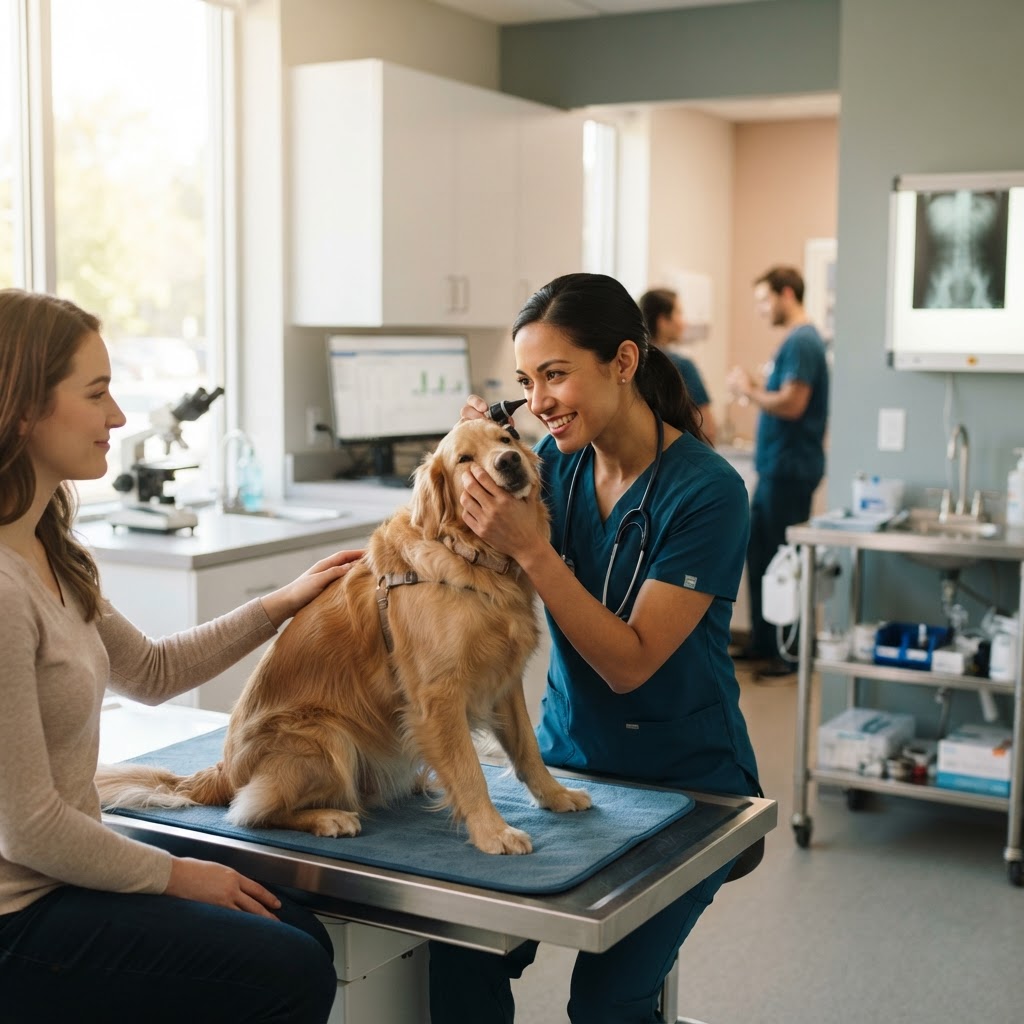
In the fast-paced environment of a general practice, it is easy to get caught up in the day-to-day rush of appointments, walk-ins, and client communications. However, to ensure long-term sustainability and profitability, practice owners and managers must rely on objective data. Tracking the right veterinary KPIs (Key Performance Indicators) transforms raw clinic data into actionable insights, allowing your team to identify operational bottlenecks, optimize pricing, and improve patient care.
Why Tracking Veterinary KPIs Matters
Veterinary KPIs are measurable values that demonstrate how effectively a clinic is achieving its key business and clinical objectives. Without them, practice managers are forced to make decisions based on intuition rather than facts. By monitoring specific metrics, you can pinpoint exactly where your clinic is excelling and where it is losing revenue or efficiency.
Consistent KPI tracking helps GP clinics:
- Identify missed charges and revenue leakage.
- Optimize staff scheduling and reduce team burnout.
- Measure the success of new preventive care initiatives.
- Benchmark performance against industry standards.
To see how your clinic stacks up against industry averages, you can use our GP Practice Benchmark Tool to evaluate your current performance.
Top 7 Veterinary KPIs to Track in General Practice
1. Revenue per Veterinarian
Revenue per veterinarian is one of the most critical indicators of clinical efficiency and pricing strategy. It measures the total gross revenue generated by an individual doctor over a specific period. According to recent industry benchmarks, a healthy target for small animal general practices is between $700,000 and $850,000 in annual revenue per full-time equivalent (FTE) veterinarian.
If this number is lower than expected, it may indicate issues with appointment density, missed charges, or a lack of support staff, which forces veterinarians to spend time on non-billable administrative tasks.
2. Average Transaction Value (ATV)
Average Transaction Value (ATV) tracks the average amount a client spends per invoice. This metric is a direct reflection of your clinic's standard of care compliance, pricing structure, and charge capture accuracy.
Improving ATV does not necessarily mean raising prices. Often, it simply requires better communication of treatment plans, consistent diagnostic recommendations, and ensuring that every service provided is accurately billed.
Monitor ATV alongside client visitation ratios to ensure that increases in transaction value are driven by comprehensive care rather than rushed, high-pressure add-ons.
3. Total Active Clients
Your active client base represents the size of your clinic's reliable revenue stream. An "active client" is typically defined as a client who has visited the practice at least once within the last 12 to 18 months. Tracking this veterinary KPI helps you understand your practice's growth trajectory and the effectiveness of your client retention strategies.
If your total active client count is shrinking despite a steady influx of new clients, your clinic has a "leaky bucket" problem. This usually points to issues with the client experience, follow-up protocols, or reminder systems.
4. Staff-to-Doctor Ratio
Operational productivity relies heavily on having the right team structure. The staff-to-doctor ratio compares the number of support staff FTEs (technicians, assistants, receptionists) to doctor FTEs. Highly efficient practices can successfully leverage a ratio of up to 7:1, though the average is often closer to 4:1.
Where is your workflow slowing down?
Take the free 3-minute GP Clinic Workflow Score and see where your daily workflow is strong, where friction builds up, and what to improve first.
Get Your Workflow ScoreA higher ratio allows veterinarians to delegate tasks such as blood draws, client education, and medical record drafting. When doctors focus solely on diagnosing, prescribing, and performing surgery, overall clinic throughput and revenue increase significantly. If you are struggling with workflow bottlenecks, consider evaluating your team structure using our GP Clinic Workflow Score.
5. Cost of Goods Sold (COGS)
Cost of Goods Sold (COGS) measures the direct costs attributable to the production of the services and products sold by your clinic. This includes inventory items like pharmaceuticals, vaccines, laboratory supplies, and retail products. For a healthy general practice, COGS should ideally remain under 25% of total gross revenue, with top-performing clinics achieving closer to 21%.
Creeping COGS usually indicates poor inventory management, lack of pricing updates, or excessive shrinkage (expired or unaccounted-for products). Regularly auditing your inventory and negotiating with vendors are essential steps to keeping this KPI in check.
6. Client Retention Rate
Acquiring a new client is significantly more expensive than retaining an existing one. Client retention rate measures the percentage of clients who return to your practice year over year. A strong retention rate (typically above 75-80%) indicates high client satisfaction and trust in your medical team.
To improve this metric, focus on forward-booking appointments before the client leaves the clinic, implementing robust reminder systems, and ensuring a seamless, welcoming experience during the first 30 days of a new client's journey.
7. Monthly Treatments per Role
This metric tracks the volume and productivity of specific roles within the clinic. By measuring how many treatments, diagnostics, or consultations are performed by individual veterinarians or credentialed technicians, you can identify capacity constraints. For example, if a veterinarian is consistently maxing out their treatment volume, it may be time to hire an associate or increase technician support to handle routine wellness visits.
Common Challenges in Tracking Veterinary KPIs
While the value of tracking veterinary KPIs is clear, many GP clinics struggle with implementation. Common hurdles include:
- Scattered Data: Relying on disconnected software systems and manual spreadsheets leads to errors and reporting fatigue.
- Inconsistent Charge Capture: If staff members use different billing codes for the same service, your revenue and ATV data will be skewed.
- Lack of Clear Targets: Without industry benchmarks, teams do not know what "good" looks like, making the data feel meaningless.
- Failure to Act: Reviewing KPIs is only useful if the insights are tied to operational decisions, such as adjusting the schedule, updating fees, or retraining staff.
How to Build a Sustainable KPI Workflow
To make KPI tracking a sustainable part of your practice management, start small. Select three to five core metrics (such as Revenue per Veterinarian, ATV, and COGS) and ensure your Practice Management System (PIMS) is configured to track them accurately. Standardize your invoice codes and train your team on the importance of accurate charge capture.
Establish a routine for reviewing these metrics. High-level numbers like weekly revenue and appointment volume should be reviewed during weekly management meetings, while deeper metrics like COGS and client retention are best analyzed on a monthly or quarterly basis. By consistently monitoring these veterinary KPIs, your GP clinic will be well-equipped to navigate industry changes, optimize workflows, and achieve sustainable growth.

Helpful.vet Team
ContributorA veterinary professional contributing practical insights to Helpful.vet.
More about Helpful.vetFrequently asked questions
Most GP clinics should review high-level veterinary KPIs, such as revenue and appointment volume, on a weekly basis. Deeper operational metrics, like client retention and cost of goods sold (COGS), are best analyzed monthly or quarterly to identify long-term trends.
A highly efficient general practice can support a staff-to-veterinarian ratio of up to 7:1, though the industry average is closer to 4:1 or 5:1. Maximizing this ratio ensures veterinarians spend their time on clinical tasks rather than administrative duties.
Improving ATV involves better standard of care compliance, such as consistent diagnostic recommendations and dental care. Ensuring all provided services and inventory are accurately captured on the invoice also naturally increases ATV without altering your fee schedule.
For a healthy general practice, COGS should ideally remain under 25% of total gross revenue. Top-performing clinics often achieve a COGS closer to 21% through strict inventory management and vendor negotiation.
Medical disclaimer: Helpful.vet provides educational and workflow-related information for veterinary professionals. It does not provide medical advice, diagnosis, or treatment recommendations. Clinical decisions should always be made by a licensed veterinarian using patient-specific history, examination findings, diagnostics, and professional judgment. See our full medical disclaimer.
Get more practical GP tools in your inbox
Short, useful resources for veterinary practice teams.